


Shoulder Bursitis is a build up of fluid in a small sac inside the shoulder called a bursa.
It's an inflammatory condition, typically caused by an underlying injury.
Shoulder Bursitis causes a lot of pain and tightness in the shoulder.
If you have this condition, you know it can make doing any basic activity painful.
It most often affects the subacromial bursa that sits between the acromion, and the upper arm bone.
The acromion is the bone right at the end of the collar bone on the top of the shoulder.
There is not a lot of space in this part of your shoulder joint.
So, any swelling can cause tightness and reduced range of motion.
Sometimes the bursa is pinched between the acromion and upper arm bone, making the swelling worse.
When the swelling is really bad, the pain can be constant and make it difficult to sleep.
It can be a stubborn condition, mostly because of how much we use our shoulder joint.
But you can heal it and be back to "good as new", with the right treatment.
A bursa is like a slippery little pillow that provides a cushion between tissues in your body.
They are in and around your joints, between skin, and bone, and tendons, and between muscles.
They allow the bones, and tendons to move with minimal friction.
They let muscles glide against each other when you move.
They also act as a cushion to keep parts from bumping into each other.

When we get injured though, one or more bursa will often swell.
You can injure a bursa itself, and it may swell from that injury.
Or you can injure tissues around the bursa and it may swell in response to the nearby injury.
Sometimes it's hard to know what the original injury was.
And for the most part it does not matter.
What does matter is that it hurts, and you want to know how to reduce the pain and heal, so you can get back to normal life.
Most bursa are usually kind of flat and elongated like a pillow.
They're filled with a fluid called 'synovial fluid'.
Synovial fluid is a thick fluid that has the consistency of raw egg white.
When it's in the bursa, the fluid fills the pillow to help with cushioning.

When your body detects some kind of damage to nearby tissue, it will respond by producing more synovial fluid.
This makes the bursa a bit bigger for better cushioning, and the joint gets better lubrication and an improved environment for healing.
If your injury persists for a long time, and your body keeps producing more and more synovial fluid, your bursa can puff up from a flat pillow to more like a ball.
This means there is less room in your shoulder for other parts to move.
A common bursa that becomes inflamed in the shoulder is the sub-acromial bursa.
This bursa sits between the top of the arm bone and the acromion.
The acromion is the shoulder bone that extends over the shoulder joint.
When it's swollen the bursa can become pinched between these two bones every time you raise your arm.
This can be quite painful and also keep irritating the bursa and prolonging the condition.
For more in-depth information about how an injury heals click here for our Healing Page.
The most common symptom is pain on the upper and outer part of the shoulder.
It's common to feel some tightness and heat in the shoulder joint and sometimes people feel a pinching sensation.
The condition can reduce range of motion significantly in some people.
In fact, it is occasionally misdiagnosed as frozen shoulder.
The pain can travel down the outside of the arm.
Redness and visible swelling are not uncommon.

There are a few less common symptoms you could encounter.
Some people have a fever.
This is not very common and if you have this symptom, you should see your doctor.
It's a sign that you could have infected bursitis.
Which means the bursitis is actually caused by a bacterial infection in the Bursa.
Some people have snapping, or grinding sensations, or popping sounds.
This is because when a bursa is swollen there is less room in the joint, and tendons and bones tend to grind or pop against each other.
Some people have more than one swollen bursa in the shoulder.
This can make the shoulder even tighter, or make the symptoms more confusing.
But ultimately, the treatment is the same, and following the right steps will get your body healing quickly.
Most sites on the web will tell you that shoulder bursitis is caused by overuse. But that can be a bit misleading. Overuse can play a role but it is usually not the main cause.
The shoulder joint has the highest range or motion of any joint in the body.
It is a complex joint and any injury in the joint can lead to other problems.
Typically, there is an injury involved somewhere in the shoulder, either directly to the bursa or in a muscle or tendon nearby.
The increase in production of synovial fluid and the size of the bursa are simply your body's natural response to protect the injury.
But, if the injury persists for a long time - especially if it's mild - the bursa continues to swell to try to protect it further.
You may have not been bothered much by the underlying injury.
As your bursa gets bigger and bigger, trying to add more protection, it can start to hurt and that's what you are likely responding to now.
So, when you go to the doctor, the focus becomes this large painful bursa.
Often, the small underlying injury in a tendon, ligament or muscle goes unnoticed and remains unaddressed.

Or it might be a strained tendon or ligament.
You may have strained your shoulder with an unusual activity like lots of overhead work.
You can also directly injure the bursa by falling on the shoulder or getting hit on the shoulder by something.
There are many ways for Shoulder Bursitis to start.
But the bottom line is you have been injured.
Now your body is trying hard to heal the injury.
The Bursa became swollen either from direct injury, but most likely it's an attempt to help heal surrounding tissues.
Because of your lack of awareness of the underlying injury, you have likely been reinjuring through everyday activity it as fast as it tries to heal.
And it will just keep going unless you do something to interrupt the cycle.
Sometimes doctor advice, sites on the web, and advice from other people with shoulder problems, can all be very confusing.
You don't need to have perfect understanding of the injury to heal it.
But some clarity can help.
So often, people go to their doctor complaining about pain and swelling in the Shoulder and the doctor says, "it's Shoulder bursitis".
They might call it shoulder impingement, since a swollen bursa can often get pinched when you raise your arm.
Sometimes they will misdiagnose it as frozen shoulder, since bursitis will often cause reduced range of motion.

As discussed, there are many shoulder issues that can show up as pain and swelling.
There could be ligament damage or a torn tendon, or perhaps tendonitis.
There could be bone spurs.
You might have arthritis.
There could be infection.
It may be something more serious.
Whatever the case, declaring it 'Shoulder Bursitis' is just the doctor saying you have a symptom.
If it has been nagging you, you want to know the underlying cause so you can address the issue most effectively.
An X-Ray or an MRI, or perhaps an Ultrasound will provide further insight, so the real issue can be properly diagnosed.
If you know what part of your body is injured, and in what way, it will give you valuable insight into what you can do to recover completely.
The bottom line though is that the treatment will be mostly the same in all but the rarest cases.
Tests will rule out infection or auto-immune disease and help you understand what injury you have in your shoulder.
But, even if you do not get the tests done, you can focus on the well understood steps of healing Shoulder Bursitis.
You will need to rest the shoulder, reduce the inflammation, and protect the shoulder from reinjury.
Rest alone will give your body the chance it needs to start getting ahead of the swelling.
Cold compression is the best way to reduce inflammation.
Anti-inflammatories are also pain killers and they make it more likely that you will reinjure the shoulder because you can't feel when you're doing the wrong motion.
Only use them at night to sleep or when you will be inactive.
Use cold compression during the day to reduce pain and swelling.
The nice thing is that cold compression reduces pain much faster than taking a pill.
It's much more effective than pain killers.
For more in-depth information about how an injury heals click here for our Healing Page.
It should be noted that in rare cases, Bursitis is caused by a bacterial infection.
If you think you have Shoulder Bursitis and you are also running a fever you should see a doctor right away to address the potential of an infected Bursa.
If you have any reason to think the bursitis is caused by an infection, then see your doctor right away.
Your doctor can prescribe antibiotics to treat the infection.
In some cases, the swelling in the shoulder may have caused other issues like tendonitis.
When the infection is treated you can then go back and treat other conditions.
We want to be clear here:
Overactivity that causes osteoarthritis is when you do something excessively strenuous over and over.
If the activity is light, you can do it endlessly and never have to worry about developing arthritis.
If the activity is light, the bursa and synovial fluid are always in place doing their job, and the joint moves freely, without damage.
Working, lifting medium to light weights repeatedly, raising of the arm - these are all considered light activity.
Even a whole lot of light repetitive activity is not a concern for a healthy shoulder.
Your shoulder is designed to do that type of activity repeatedly.
If the activity is heavy though, if you are putting a lot of pressure on the joint during the motion, tissue can rub that shouldn't. Bones can push together or ligaments and tendons can get squeezed to the point the synovial fluid gets squeezed out of the way and the cartilage touch each other. If it happens occasionally, that's not a problem. The bursae and cartilage are there for that purpose, to be a bumper and wear pad during times of heavy strain. But there's a limit when it comes to heavy activity.

If you do a heavy load activity over and over and over again so that the parts of your shoulder constantly bump or grind on each other, then it is possible they get worn down over time faster than they can regenerate. When that is the case, a doctor will tell you the joint has developed osteoarthritis.
Osteoarthritis can go away if you let up on the activity and let the joint heal. Often, active people develop osteoarthritis in their joints that they don't even realize is there. And the body's response to osteoarthritis is, again, to start producing synovial fluid to help the joint heal. When it is mild enough, you don't notice it, but if it persists for a long time, then that can cause Shoulder Bursitis to develop.
When you read about Shoulder Bursitis, it will often say it's an overuse injury.
That's possible but only with extreme overuse.
If you are doing mild repetitive activity, you are not likely to sustain any injury no matter how much you do it.
If the cartilage on the bones is not being pushed hard enough to bump and rub a lot, then your joint can do that activity forever.
If the tendons and ligaments are not being squeezed excessively during repetitive motion then you will be fine.
So don't get confused by the terms 'overuse injury' and 'repetitive strain injury'.
That sort of injury only occurs if the excessive activity is also excessively strenuous on the joint.
Your Shoulder is designed to be in constant motion. That motion contributes to synovial circulation and prevents the parts of your joints from getting squeezed for too long. Your blood has your heart to pump it through your body, but synovial fluid only moves through your joints as a result of motion. You don't need to be excessive though, and the motion does not need to be under heavy weight. If you have any pain at all when you are moving, then you are doing something you should not be doing. Heed the pain. Move, but heed the pain.

People don't realize, you can actually hurt your shoulder by 'doing nothing'. Constant pressure on a body part when it is not moving can lead to injuries called Isometric Strain Injury. If you are inactive for an extended period of time, and your Shoulder is being held in a position where part of it is being squeezed too much and too long, you may be hurting yourself.
You have a synovial fluid and bursa buffer between the parts in your shoulder to protect them most of the time. When you move, the synovial fluid is squeezed from between the parts into areas between the bones called synovial cavities. The synovial fluid moves back when the squeeze is released, over and over again. It's designed to work that way. That gentle flow in and out of the bursa to other parts of your shoulder acts as circulation for the synovial fluid to do the work of the blood that isn't there.
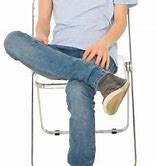
Isometric Strain may be hurting your shoulder when you aren't moving at all. This kind of injury happens when you keep your shoulder locked in a certain position for a long period of time. It may be locked straight, or bent, or maybe with a twist. But, if you keep your shoulder pressed into any one position for an extended period of time, that tissue being squeezed can get damaged. Remember the synovial fluid shock absorber? Well, if you keep enough pressure in one place for long enough, the synovial fluid gets pushed out of place until there's nothing between the different tissues. Then, if you move suddenly, maybe not even with a lot of effort, a tear is much more likely.
Isometric Strain happens more often than you realize. It's what happens to people who sleep with their head resting on their arm. Or who lay on their side with their head resting on their arm while reading a book or looking at their phone. Any position where the arm is pressed in a position for a long period. This can happen in other joints as well.

There are things that we do, that maybe you haven't thought about that cause isometric strain in different parts of your body.
If you are unsure what caused your injury, think about this possibility as well.
If this is the culprit then you may need to correct that habit, or you risk causing the injury over and over again.
You will need to stop it for some time to at least let your shoulder heal.
Sleep position is something that should be considered here.
This goes for your tendons and ligaments, bones, cartilage and nerves and the other tissue in your shoulder.
If they get squeezed under even modest pressure for a very long time, they can get damaged.

With Isometric Strain, you usually don't notice it when you're actually doing the damage.
This makes it hard to figure out, because you end up feeling the pain during other times of activity.
It is quite possible that the activity you are doing when you feel the pain isn't the root cause of the problem.
But, the pain is an indication that your situation is bad enough.
By this point, all sorts of activity may start to make your situation worse.
The good news is, that if you correct the underlying cause and treat the condition so it heals, you may be able to resume your favorite activity and never have to worry about developing shoulder bursitis again.
Shoulder Bursitis can heal in a few weeks with proper treatment.
But often it takes 4-6 weeks to fully heal.
Many times, there are related problems in the shoulder and the problem will not fully be resolved until everything has healed.
If there is also tendonitis in the shoulder, for example, the whole shoulder may take 1-2 months to fully heal.
But, the pain will most like be gone in a few weeks.
It's important to remember that just because the pain is gone, that does not mean that you have fully healed.
Even after your pain has resolved go back to normal movements slowly and carefully.
Be cautious about lifting anything heavy for a while and avoid movements like throwing a ball until you are sure your shoulder is fully healed.
If you feel any pain, then stop whatever is causing it and take it easy for a bit.
If you have had chronic Shoulder Bursitis for a long time, it can take a few months for the bursitis to go away completely. The bursa sac can thicken over time from irritation, and this takes longer to heal than typical irritation and swelling.

The internet is full of bad advice about treating your shoulder.
Here are a few examples.
Steroid injections don't solve the underlying problem.
They are often the first thing that doctors will offer.
They do this because it will help with the inflammation and pain.
But those things will just come right back if you do not heal the injury.
In most cases, people just get the shots and the pain goes away, so they think they are healed.
The doctor should explain that you are not healed, and need to use that time to let the shoulder heal.
Since these injections have a host of other problems, and can lead to weakening of the tendons in the shoulder, it's better to just go straight to treating the injury properly.
Anti-inflammatories don't help the real problem.
They can reduce some swelling in the shoulder, and that might feel better, but it does not address the Shoulder Bursa being swollen with lots of synovial fluid.
Again, the danger is that the Anti-inflammatory makes you feel a little better, and with less pain you move more.
So when it wears off, your shoulder is even worse because you've been using it too much again.
This cycle just keeps going until you interrupt it with proper rest.
Driving through the pain will just make it worse.
Again, we use our shoulders all the time, so it's easy to keep irritating the swollen bursa and any other injury in the shoulder as well.
You need to rest the shoulder for a while.
It might even be a good idea to use a sling to immobilize the arm for a bit, so the body can work on healing.
Using cold compression can help reduce pain and inflammation without masking the pain when you move the wrong way.

You cannot exercise a Bursa directly.
It is not a muscle.
It does not get stronger from exercise in the way that a muscle does.
Exercise does stimulate blood blow, and blood flow is very good for healing.
But, not if it is at the cost of aggravating the injury.
Strenuous exercise movement will simply cause irritation to a swollen bursa and slow the healing process.
Heavy exercise will not heal your injury. Rest will let the body heal.
Exercise is valuable much later in the healing process when you want to rebuild strength.
But during the early stages of healing, after an injury, exercise is a great way to cause reinjury or irritate Shoulder Bursitis.
The Same goes for stretching.
You can't stretch a Bursa.
Some sites suggest there is a way to "open up" the shoulder and make it less tight.
But if the bursa in your shoulder is swollen, the movement of stretching exercises will simply add to the swelling and irritation.

It could be from work activity, or sleep position.
It's up to you to figure out what is irritating your Shoulder Bursitis and find a way to avoid it.
Rest the shoulder as much as possible and use cold compression to help reduce inflammation.
You don't have to undergo surgery in order to get rid of your issue.
You can get rid of your shoulder bursitis and the underlying injury with conservative treatments.
Surgery is only needed in very rare cases.
You could be offered surgical draining of the bursa.
But in most cases, this is not needed and you will heal fine with cold compression and rest.
Also, your bursa will simply fill back up with synovial fluid.
In severe cases doctors will offer bursectomies.
This is removal of all or part of the bursa.
This should be avoided as much as possible.
The bursa is there to protect the shoulder and it is trying to do that now by swelling.
It is much better to respond to it's efforts by helping it heal, and do its job.
If you remove a bursa, you remove a protector of your shoulder forever.
Once it's gone you will no longer have the protection it once provided, and it is very likely that other shoulder problems will result.
The vast majority of cases of Shoulder Bursitis can be healed with rest and conservative treatments like cold compression, and protecting the shoulder from reinjury.
There are proactive treatments available as well, such as BFST Diathermy to stimulate blood flow and promote the healing process.
Proactive treatments, are typically for people who have had bursitis for a long time or have a need to heal more quickly.
For more information on proactive treatments click here to visit the Recommended Treatments page.

For a little while - not forever - it is really helpful to give your shoulder a rest.
In many cases, resting your shoulder for a few weeks will give it time to heal to a point that your body gets ahead of the healing / reinjury cycle.
It's important to realize that once the pain and swelling go away, your underlying injury may not be healed completely, so take it easy and go back to regular life gradually once the pain and swelling are gone.

If you want your Shoulder Bursitis to go away as quickly as possible, you need to rest the affected shoulder. Avoid any physical activities that could cause further injury to your shoulder. If your Shoulder Bursitis developed from a shoulder injury or condition, do your best to avoid the activity that caused this shoulder injury or condition. Consider using a sling to remind you not to use your arm for activities.
Around the 6-8 week mark you can start doing some light stretching and strengthening exercises. As long as you can do it without any pain. Slowly work your way back to your regular level of activity.
The bottom line is that you can heal your Shoulder Bursitis.
You just need the right treatment.
Focus on resting the shoulder as much as possible at first.

But make sure you use high quality medical support tape.
Most brands, even the big names, use toxic chemicals in the glue.
You need to wear the tape the whole time you have to move around so be sure to get tape that is designed to be used all day long.
Use cold compression to reduce inflammation after activity.
You will be surprised how fast cold compression takes out the pain as well.
You really need to focus on rest, reducing inflammation, and protecting your shoulder from reinjury.
If you do this, your body can get ahead of the inflammation cycle and you can heal once and for all.
If you want to speed up healing even more, then use BFST to stimulate healing blood flow.
Blood flow is the key to healing faster.
But you have to limit movement while healing which reduces blood flow.
BFST lets you stimulate blood flow without movement.
You do not need BFST to heal.
You can heal without it.
But athletes, and those who don't have anytime to waste, use BFST to speed up healing.
For more information on treatments click here to visit the Recommended Treatments page.


