The next available Customer Service Representative will call you back.
Thank you for submitting a callback request. A customer service representative will contact you shortly.
Hip Labrum Information
Answers to Questions About Hip Labrum Injuries
What is the Hip Labrum?
What Causes a Labrum to Swell?
How Long Does a Hip Labrum Issue Last?
What is in a Hip Joint?
What can I do now?
What is the Hip Labrum and What Causes it to Get Injured?
The Hip Labrum is a ring of very tough tissue that seals your joint closed where your leg bone goes into your hip.
The top of your leg bone (your femur) is shaped with a big round ball at the top, and that ball fits perfectly into a matching round socket in your hip bone.
When we say 'perfectly', there is a bit of space all the way around the ball and socket, and your body fills that space with something called 'synovial fluid'
One key role of the Hip Labrum is that it seals that space shut, so the synovial fluid doesn't escape.
That space that is being sealed shut is referred to as the 'synovial capsule'.
Your body fills that capsule FULL of synovial fluid, to the point that the ball of the leg bone is actually held away from the walls of the hip bone socket by the pressure of the fluid.
So, where your bone goes into your hip, you don't actually have bone rubbing on bone when you walk.
Instead, you have a hydraulic socket, where your hip bone and leg bone are separated by fluid, which gives it a full range of motion with no wear and tear because the bones don't actually touch.
Now some sites will tell you that the hip labrum actually holds the ball in the socket, but that's not correct.
To stop the ball from pulling out of your socket, a web of ropes (ligaments) go all the way around the joint to resist any pulling motion but still allow the joint to flex and rotate.
That web of ligaments goes around the outside of the Hip Labrum, and that ligament mesh is really what holds the ball in the socket.
While the ligaments do most of the work holding the joint together, and the fluid does most of the job keeping the bones from touching, the labrum provides the seal that makes it all work.
That seal must be strong enough to hold the fluid in the capsule under tremendous pressure.
It must also allow the ball to slide smoothly along the seal without allowing the pressurized fluid to leak out.
And, it must have a bit of flexibility to handle the jolts and strains when the ligaments and synovial cavity give a bit under the strain.
Sometimes, if you really stretch your joint to the limit, the bones can move to a point where they pinch the labrum a bit.
Similarly, if you jump or put a sudden heavy load on your joint, that can also bring the bones together, squeezing the labrum momentarily.
In those cases, the hip labrum functions as a bumper so the edge of the hip bone doesn't grind with the leg bone.
Your joint actually has this kind of bumper pad on most of the bone surfaces in the joint and it's called cartilage.
The Hip Labrum is cartilage too, it's just a special one protecting the edge of the hip bone and forming the synovial seal.
For protecting the bones, the Hip Labrum is your second level of protection after the fluid filled capsule and the ligaments.
It's in this role as your secondary protection, as the bumper for your bones, that is one common way the hip labrum can get damaged.
Small and occasional bumps and grinds are what it was designed to handle.
Most of the time it handles the collisions without issue.
Sometimes it comes away a bit dented or scratched but your body heals it over time and you don't even realize it.
And sometimes, unfortunately, things are a little worse and the damage can be more severe.
The other possible way is if the ball gets pulled so hard that the ligaments give a bit.
Because the labrum is sealed so tightly around the ball, it gets pulled away from the hip and stretched when the ligaments can't hold the strain.
This is what the image above illustrates with the red section on the labrum representing a tear from being pulled.
That might be the kind of damage that comes with this sort of strain.
Keep in mind that all the images shown are to try to illustrate particular aspects of your joint.
In reality it is all a big mesh of tissue on tissue on tissue and there are no gaps like the images show for purpose of this explanation.
There are other tissues like nerves, and veins, and muscle, and tendon, connective tissue, and fat, and skin, and other tissues we don't typically discuss.
Again, it's possible that if you really jam your joint hard, you can have bones hitting hard enough on the labrum to damage it severely.
That can be from sudden impact, such as a fall or a jump.
Your ligaments and that fluid shock absorber, the synovial capsule, are especially good at protecting against sudden motion, so generally those one-time impacts need to be pretty significant to do damage.
It is also possible that if you keep your hip strained in an extreme position for long enough, that the ligaments and fluid slowly allow the bones to come together.
A long time at moderate pressure can often move the bones together more than a sudden but much larger pulse.
Both the amount of the pressure, and how long it under sustained pressure are both factors.
In the case where there is modest pressure but for a very long time, your bones may eventually rest against each other with the cartilage pressed in between.
If you suddenly move or twist from that position, the hard surfaces touching can cause one or another to tear with the motion.
This happens even if it isn't that strong because the bones and cartilage are already in contact with each other.
We've all experienced those situations where you are sitting in an awkward position for a long time.
Then when you go to move you really feel it in your joints!
That's an example of where you are probably feeling the effects of bones coming together and squeezing the cartilage because of long sustained pressure.
A hip labrum tear can be the result of a big jolt, and when that happens you will likely remember the moment.
A hip labrum tear can also be the result of you straining your hip for an extended period of time and then a sudden motion causes the damage.
There's a third scenario.
If you have frequent, repeated incidents of either modest bumps or sustained strain you can do minor damage each time that adds up in the long run.
In the last scenario you don't really realize when it is happening, you realize it after the damage accumulates to a major level.
In the last scenario, people often don't make the association between the injury and the cause, so if you're unsure what happened, think about this.
Isometric Strain Injury
Your hip is designed to be in constant motion.
That motion contributes to circulation and prevents the parts of your joints from getting squeezed for too long.
People don't realize, you can actually hurt your hip by 'doing nothing'.
Constant pressure on a body part when it is not moving can lead to injuries called Isometric Strain Injury.
If you are inactive for an extended period of time, and your hip is being held in a position where part of it is being squeezed too much and too long, you may be hurting yourself.
You have a synovial fluid buffer between the bones in your hip and cartilage on their ends to protect them when they get too close.
When you move, the fluid is squeezed from between the bones into other areas of the joint capsule and back when the squeeze is released, over and over again.
It's designed to work that way.
It's possible, though, when you stop in the wrong position, that your bones squeeze the joint constantly.
When that happens, the synovial fluid can get all squeezed away until the cartilage from one bone is pressing constantly and firmly on the other.
If you stay like that long enough you can do some damage to your cartilage.
Or, if you move the joint, while the cartilage are tightly squeezed together, they may tear.
If that position is held for really long periods of time, day after day, that damage may accumulate.
The same goes for your tendons and ligaments and nerves and the other tissue in your hips.
If they get squeezed under a lot of pressure for a very long time, they can get damaged.
Very often, it is the times when we're not using our bodies that cause the condition.
And that kind of damage doesn't hurt when it's happening.
It hurts later, when you try to use the tissue for your normal activity.
Very often, that is what is behind hip injuries of all sorts, especially when you don't remember an event that could have caused it in the first place.
So, the chances are high that you may be hurting your hips during times of inactivity.
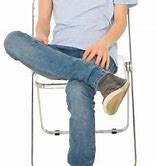
It may be when you are sitting for long periods with your legs crossed.
Or you may stand for hours with your hip extended and all your weight on one leg.
It may even be a position that you sleep in for long periods.
There may be times when your hip is locked in one position for a long time and with a fair bit of weight or pressure.
Think about it.
With Isometric Strain, you probably don't notice it when you're actually doing the damage.
This makes it hard to figure out because you end up feeling the pain during other times of activity.
It is quite possible that the activity you are doing when you feel the pain isn't the root cause of the problem.
But the pain is an indication that your situation is bad enough that your activity may start to make your situation worse.
In many cases where the Hip Labrum has been torn, there may have been a one-time event that caused the injury, but repeated isometric strain is preventing it from healing.
Your hip can handle a fair bit of abuse when it's healthy.
But when you have an existing injury, isometric strain can be much more damaging because the tissue is more fragile than when it was healthy.
The good news is that if you correct the underlying cause and treat the condition so it heals, you may be able to resume your favorite activity and never have to worry about hip pain again.
Diagnosing a Hip Labrum Tear
Your hip labrum is surround by bone and a lot of dense ligament tissue.
Traditional diagnostics like MRIs and X-Rays can be limited in their ability to see the hip labrum clearly.
In many cases, your doctor will rule out other possibilities with these tests and based on a physical exam and the pain you are feeling interpret it to be a labral tear.
There's a variation of an MRI called an anthrogram that involves injecting a dye into the joint.
The anthrogram is highly not recommended as it's painful, has some risks, and generally the additional information has no bearing on the treatment path.
If you are going down the surgical solution path, it may be used as preparation so the surgeon fully understands the anatomy of the joint prior to planning the surgery.
Surgery is the treatment path for very unique and extreme cases.
Never undergo hip labrum surgery without more than one opinion from experienced orthopaedic surgeons.
How Long Does a Torn Labrum Last?
There are 3 Key Factors:
1. The severity of your injury.
2. The amount of reinjury you do.
3. Proactive treatments you apply.
What people really want to know is, "When will the pain be gone and I can return to normal life?".
That's very different than when your tissue is actually fully healed.
Long before the labral tissue is fully healed, you will be doing most of what you could do before.
If it's a very minor tear and you really protect it to not reinjure it, the pain can subside in 6 weeks.
Once the pain is gone you can start to slowly go back to normal life and if you do it carefully you will probably be doing what you did before the injury within 3-6 months.
Even though you return to normal activity and have no pain, the tissue is still healing underneath and it probably will be doing so for an additional 6 months after that.
So, for a minor tear, pain gone: 6 weeks, Normal life: 16 weeks, tissue as-good-as-new: 1 year
If it's a moderate tear and you really protect it to not reinjure it, the pain can subside in 12 weeks.
Once the pain is gone you can start to slowly go back to normal life and be doing what you did before within 6-9 months.
Fully healing the underlying tissue to good-as-new in about 18 months.
For a major tear and you really protect it, the pain can largely subside to almost nothing in 6 months.
Once the pain is gone, slowly go back to what you did before within 10-16 months.
Fully healing the underlying tissue to good-as-new in about 2 years.
At this point, people what to know what they can do to speed up the process.
You can be proactive, but what's most important is to avoid the things that will slow down the healing process or prevent it all together.
The short-list of things to avoid are to not drive through the pain, avoid using painkillers, and identify and avoid activities and isometric strains that can make the situation worse.
As long as you are still in the painful stage, stretching is bad, not good.
Physiotherapy is also for after you get past the painful period - it's good then, but it can be damaging if started too soon.
If you aren't happy with the best case healing times, don't do things that are going to drag out the injury.
Proactive Treatments
What You Should do when you have a Torn Labrum
For a little while - not forever - it is really helpful to give your hip a rest.
In many cases, resting your hip for a few weeks will give it time to heal to a point that your body gets ahead of the healing / reinjury cycle.
It's important to realize that once the pain and any swelling go away, your underlying injury will not be healed completely, so take it easy.
Go back to regular life gradually, once the pain and swelling are gone.
If you want to be more proactive about healing the problem, you can click here to visit the Recommended Treatments page.
Rest & Use Conservative Treatments
If you want your labrum injury to go away as quickly as possible, you need to rest the affected hip.
Avoid any physical activities that could cause further injury.
Do your best to avoid the activity that caused the tear in the first place.
Consider using crutches to keep the weight off your injured hip and avoid re-injury.
Do regular ColdCure® treatments to control the pain and swelling.
The compression during each treatment helps gently move the synovial fluid back into your hip that may have been squeezed away during activity.
You can also focus on healing the tear with regular BFST® treatments.
This combination will work to accelerate the healing process.
Around the 4-6 week mark - not before - you can start doing some light stretching and strengthening exercises.
Slowly work your way back to your regular level of activity.
Continue doing BFST® treatments long after the pain and any swelling disappear to maintain the healing you've done.
Do a ColdCure® treatment if you experience any flare-ups of pain and swelling and after any significant activity.
Surgery Should Be a Last Resort
You don't have to undergo surgery in order to recover from a labrum tear.
Even a serious tear will heal with conservative treatments.
However, it's possible that your one of the very few people who requires surgery.
These are very rare cases.
Hip surgery often involves the removal of part of the cartilage and that is not what you want.
That's a path to an eventual full hip replacement, it's just a temporary fix.
You want to do everything you can to let your cartilage heal on its own.
Only in rare cases is it required for the labrum to be surgically addressed.
Your body has a unique ability to pull the two ends of the cartilage back together even in the case of a complete tear most of the time.
If one end of a complete tear is seriously mislocated, arthroscopic surgery may be performed.
If surgery is your only option, make sure your post-surgery recovery goes as smoothly as possible by using BFST and ColdCure.
Use a ColdCure® Back and Hip Wrap to reduce the inflammation and relieve the pain for the first few days following surgery.
Once the inflammation has gone down, promote blood flow to the injured area using a BFST® Back/Hip Wrap.
This will improve your circulation and help you heal faster.
Even if surgery is required, time wise, recovery from Hip Surgery is no faster than recovery without surgery.
Surgery is only required to reposition pieces of the tear in some cases.
Any orthopaedic procedure to refasten the labrum are only positional at best.
A stitch or cauterized tissue are in no way strong enough to make your labrum functional again.
Once the labrum is repositioned, your body still has to heal it naturally and that timeline is the same as a major tear listed above.
Always get an opinion from more than one Orthopaedic Surgeon before committing to surgery.
Consider what each one has to say.
Painkillers mask the pain, causing you to continue to stress and injure your hip.
This will only make your condition worse.
It is understandable that people need relief from the pain, so if you have to take painkillers, restrict them to times when you are off your feet.
You can use painkillers to help you sleep.
Using them when you are active is a recipe for permanent damage.
Your choice of pain killers is important.
You can give us a call to discuss which ones are best.
The ColdCure® Back and Hip Wrap is designed to relieve the pain associated with hip injuries such as labrum tears.
This safe and effective pain reliever is also great at bringing down swelling and inflammation.
The ColdCure® Back and Hip Wrap is incredibly soothing and provides support and protection for your hip.
The painkilling element is incredibly powerful and it works instantly - there's no 20 minute wait like with pills.
Hip injuries can be extremely painful and debilitating.
Painkillers such as ASA or acetaminophen are often used to treat the pain but these drugs do nothing to treat the actual condition.
In fact, most painkillers are also blood thinners and make the bleeding worse for fresh tissue injuries.
With little exception, people who rely on pain killers through the day have longer recovery times and greater likelihood of permanent tissue damage.
Cortisone injections are used in extreme cases but these too are intended only to address the pain.
They do not promote healing of the injury itself and they put you at a very high risk of further injury.
Typically, cortisone injections are given to patients who are destined for surgery to relieve the pain in the interim.
Never get cortisone injections if your desire is to heal properly and quickly.
They may reduce the pain but they will do so at the expense of the long-term health of your hip.
Blood Flow is Essential for Healing
There's no doubt about it, for healing most tissue injuries in the body, blood flow is the most critical element in rapid recovery.
The blood flow brings the building blocks for new cell growth.
It carries away the waste and damaged tissue.
It brings antibodies to protect against infection.
Your blood flow supplies the cells in your body with everything it needs and removes much of what needs to be taken away.
While your heart ensures a sufficient supply to your body as a whole, in the individual parts of your body there are a lot of factors that determine how much that area receives.
Motion in local tissue can play a significant factor in blood supply but when you are injured, that motion is less and so is that trigger to bring blood to the area.
People often don't understand that motion is enough and that doesn't mean putting a heavy load on your joint.
When you swing your leg gently and with limited range that's enough.
Adding the weight of your body or doing stressful exercise doesn't improve the motion and the added loads can end up resulting in reinjury.
Find light gentle motions that you can do with no pain at all and do those several times each day.
If you're using crutches the swinging of your leg through the day is enough, you don't need to add more load.
Diathermy is a medical process to promote blood flow in tissue that is at rest.
Diathermy is a process by which energy is sent deep into the body to stimulate blood flow in tissue far below the skin.
An example of diathermy are ultrasound treatments that people get when they go to physiotherapy.
The challenge with ultrasound is that all diathermic treatments are effective for up to 4 hours whereas people go to the physio clinic once every couple of days.
Also, ultrasound is an older more risky process that can damage subdermal tissue so it needs to be performed by a technician - you can't do it at home.
The good news is that you have an option to ultrasound.
BFST™ devices from King Brand are diathermic devices that people can buy to treat themselves at home.
With a home diathermic device, you can treat yourself multiple times each day and significantly improve your blood flow and the healing process.
And they're more powerful too.
An Ultrasound device is very focused and the effective area can be less than 1 square inch in the underlying tissue.
That's why it needs to be constantly moved around, both to cover the whole injury and to prevent the tissue from burning.
BFST devices have massive coverage areas, treating up to 70 square inches without needing to move it around.
They are typically up to 10x more powerful than ultrasound too - and completely safe.
Blood Flow Stimulation Therapy™ (BFST®) gives your hip the blood flow it needs to heal quickly and completely.
BFST® brings extra oxygen and nutrient-rich blood to the injured area - a requirement for the body to heal itself.
With a King Brand®BFST® hip Wrap, blood flow can be stimulated in the area of injury while you are at rest.
With improved blood flow and without physical activity and the risk of re-injury, you can recover from your hip injury at a surprisingly rapid rate.
I never write customer reviews for products, but I have to let people know about this incredible product.
About 3 months ago I tore my hip labrum playing tennis.
It was very painful to walk short distances and I had problems sleeping at night because of the pain.
I Tried resting for 4 weeks, but the pain never went away.
Finally, I got a MRI and it showed a Hip Labral Tear, so I scheduled an appointment with a surgeon.
But because the surgeon was in great demand, the appointment was a month away.
Everything I read on line said a Hip Labral Tear does not heal on its own.
But I saw the King Brand web page claiming they could heal Hip Labral Tears.
I was very skeptical, but thought I would give it a shot while waiting to see the surgeon.
I did the treatment four times a day, and after two weeks my pain at night was gone.
When I started treatment, I could not walk a ¼ mile without pain, but after two weeks I was walking a ½ mile pain free, and after four weeks I'm walking 2 miles with no pain.
I might be able to walk further pain free, but don't want to push it quite yet.
I highly recommend the King Brand for Labral Hip Tears.
It saved me from having surgery and the long recovery time associated with it.
To sum it up, I had 8 weeks of pain and King Brands caused incredible healing in just 4 weeks.
I cannot thank King Brand enough.
By the way, there costumer service is excellent.
Gary from California BFST hip July 27, 2018
King Brand® Quality
King Brand® soft tissue rehabilitation medical products are the #1 choice by top Athletic Therapists and Medical Practitioners worldwide.
We provide guaranteed results and customer satisfaction.
Like all King Brand® products, there simply isn't a better performing option.
All King Brand® products come with a 100% satisfaction guarantee.
Try our products and if you are not completely impressed, you can send them back for a full refund.
We know you will love them though, because thousands of people already use them and rave about the results.
King Brand®BFST® and ColdCure® Wraps are FDA Registered medical devices.
They are intended to prevent, treat and cure soft tissue injuries and chronic conditions.
Part of being an FDA Registered company means that our products are made from high quality, biocompatible materials.
These devices are manufactured and tested to the highest safety standards in the industry.