The meniscus is important tissue in your knee that sits on the ends of both the thigh bone and shin bone of your leg.
They act as bumpers, shock absorbers, and as wear pads to prevent the two bones from damaging each other as your knee moves under your weight.
The meniscus is living tissue.
There are actually two separate pieces called the medial meniscus and lateral meniscus but we will treat them as one here.
It doesn't matter which or if both are damaged, the result is still the same - debilitating pain.
Meniscus is made of cartilage, which is probably one of the toughest tissues your body makes.
In order to understand how the healing of a meniscus happens, it helps to understand a bit more about the knee.

Synovial fluid carries oxygen and nutrients, and everything the living parts of your body need in the knee joint.
It also removes waste and damage from the cells.
Synovial fluid replaces the roll of blood in your knee and much more.
It also plays a key roll in lubricating the joint to minimize wear and tear.
And, it works as a kind of hydraulic shock absorber in your knee so the meniscus cartilage doesn't have to take all the abuse.
When your knee compresses and expands under the weight of your body the synovial fluid gets squeezed in and out of the area.
To some degree, the surrounding tissue, gives away and to some degree the Synovial Fluid gets pushed into a special sac called a bursa.
As you put weight on and off your knee, the synovial fluid pumps in and out of your knee a tiny bit, back and forth between the bursa and the knee capsule.
The result is that it acts as a liquid shock absorber for your knee.
This pumping action also causes the synovial fluid to flow through your knee so it can do the delivery work of the blood that isn't there.
Synovial Fluid actually moves around in your joint as a function of your movement.
When your body detects an issue in your knee such as meniscus or ligament damage, it increases the production of synovial fluid.
This provides more lubrication, more shock absorption, and more nutrition to protect and help heal the damaged tissue.

When any inner knee injury last for a very long time, it is common for the bursa to swell from all the extra fluid produced.
That bursa is in the back of the knee, and when it swells it is referred to as a Bakers Cyst.
A Bakers Cyst can be painful, but it is not bad in that it is a big reservoir of good synovial fluid for your knee to use.
Most meniscus injuries though, are more noticeable, and so painful that you don't drive through the pain long enough for a Bakers cyst to form.
Driving through the pain is the number 1 issue people have with healing meniscus injuries.
Your knee is perfectly capable of healing itself, but giving it the rest it needs is very disruptive to our regular routines.
Rest is the most important element of dealing with any meniscus issue.

Sometimes, you might not remember any specific event that caused your meniscus tear.
It may have been a small injury at the time - one you didn't even notice.
But since then, your regular activity may have caused the injury to gradually get worse.
Meniscus tissue is tough, but once it's compromised, it becomes more vulnerable.
Even a little strain can make the tear worse.
Some people notice intermittent pain during familiar activities.
Others don't realize anything is wrong until a Baker's Cyst forms.
In most cases, the activity you're doing when the pain appears didn't cause the injury.
The real cause was likely an earlier event - a moment of bad luck.
Now that it's torn, regular activity may be aggravating the damage.
To heal, you need to ease off that activity and others like it.
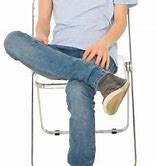 Another way you may have damaged your meniscus is through something called Isometric Strain.
This is different from injuries that happen during a harsh movement.
Isometric Strain occurs when you aren't moving at all.
It happens when your knee stays locked in one position for a long time - whether straight, bent, or twisted.
Another way you may have damaged your meniscus is through something called Isometric Strain.
This is different from injuries that happen during a harsh movement.
Isometric Strain occurs when you aren't moving at all.
It happens when your knee stays locked in one position for a long time - whether straight, bent, or twisted.
If your knee is pressed into one posture for too long, synovial fluid can be displaced, reducing its protective cushioning.
With the fluid pushed out of place, meniscus tissue gets squeezed like a sponge.
Without a lubricant or fluid buffer, it becomes prone to damage.
Then, if you move suddenly - even without much effort - a tear becomes much more likely.
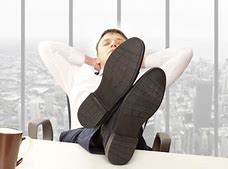 Isometric Strain happens more often than most people realize.
It occurs when you stand in one place for a long time with your knees locked.
It also happens when you sit with your legs crossed for extended periods - that constant torque on your knee is intense.
Isometric Strain happens more often than most people realize.
It occurs when you stand in one place for a long time with your knees locked.
It also happens when you sit with your legs crossed for extended periods - that constant torque on your knee is intense.
Some people even cross their ankles while they sleep.
That can cause the top knee to hyperextend for hours, putting constant pressure on one part of the meniscus.
There are many small habits you might not think about that can cause isometric strain in your body.
If you're unsure how your injury happened, this could be the cause.
If so, you'll need to correct that habit, or risk re-injury.
You must stop it long enough to allow your torn meniscus to heal.
Regardless of how your meniscus injury started, you need to go easy on your knee to let it heal.
Once it's injured, you may feel pain during everyday activities that never bothered your knee before.
If you feel pain during an activity, that means your actions are likely tearing the meniscus further, and you should stop right away.
Never drive through the pain of a meniscus injury.

Your knee is designed to move.
It's made to handle walking, running, and regular physical activity.
That is not even abuse - that's just normal use.
Once the meniscus is torn, regular activity can keep retearing it, but normal use likely did not cause the original injury.
There are a few people who do push too far, though.
Still, when your knee is under long-term excessive strain, it usually leads to osteoarthritis - not a meniscus tear.
If you have both a meniscus tear and a diagnosis of arthritis, it probably means your knee was under constant stress and then one day you had bad luck.
 If you have a torn meniscus, there is no reason you cannot have a very active lifestyle again one day.
Just do what you need to do to heal your injury properly.
Remember, though, once the pain goes away, you are not fully healed.
When the pain goes away your meniscus is probably only 30% healed.
So, however long it took to get rid of the pain, go twice that long with your treatment plan, and going easy on your knee.
Most people need to go easy on their knee for several months after the pain is gone so the meniscus can heal completely.
If you have a torn meniscus, there is no reason you cannot have a very active lifestyle again one day.
Just do what you need to do to heal your injury properly.
Remember, though, once the pain goes away, you are not fully healed.
When the pain goes away your meniscus is probably only 30% healed.
So, however long it took to get rid of the pain, go twice that long with your treatment plan, and going easy on your knee.
Most people need to go easy on their knee for several months after the pain is gone so the meniscus can heal completely.
The internet is full of bad advice about treating your knee. Here's a short list though:

REST.
For a little while - not forever - it is very helpful to give your knee a rest.
In many cases, resting your knee for a few weeks gives it time to heal enough for your body to get ahead of the healing vs. reinjury cycle.
It's important to understand that even once the pain goes away, your underlying injury may not be fully healed.
So take it easy and return to your regular activity level gradually once both pain and swelling are gone.
If you want to take a more proactive approach to healing, you can
click here to visit the Recommended Treatments page.

If you want your meniscus tear to go away as quickly as possible, you need to rest the affected knee.
Avoid any physical activities that could cause further injury to your knee.
If your meniscus tear hurts during any activity, do your best to avoid the activity - at least for a little while.
Consider using crutches to keep the weight off your injured knee and avoid re-injury.
Do regular ColdCure® treatments to control the pain and swelling for 20-30 minutes at a time.
The compression during each treatment helps gently move synovial fluid back into your knee from the bursa sac
1 / 2.
You can also add to your routine regular BFST® treatments.
Around the 4-6 week mark you can start doing some light stretching and strengthening exercises.
Slowly work your way back to your regular level of activity.
Continue doing BFST® long after the pain (and lump if you have one) disappear to maintain the progress you have achieved.
Do a ColdCure® treatment if you experience any flare-ups of pain and swelling and after any significant activity.
3 / 4

Physiotherapists and doctors recommend stretching and strengthening exercises because it helps to promote blood flow through your injured knee.
Remember, it's the motion in our knee that causes the synovial fluid to circulate.
When we are injured though, we need to reduce our activity, and that leads to a weakening of the muscles called atrophy.
In the early days of recovery, it is only the motion that we need to pump the joint.
We don't need to bear a lot of weight on the knee.
Really, as long as you don't feel pain, whatever activity you are doing is probably okay.
So in the early days of recovering, the early days of PT, the key is motion, not exercise.
Physiotherapy is also intended to help strengthen the surrounding muscles to rebuild that lost muscle once you are on the mend.
But, it can be harmful if heavy stretching and exercises are started too early.
Your injury first needs to stabilize, and in order to stabilize the injury you need to rest.
If you still have significant injury, any physio you do should start off very light.
Our advice is, don't start Physical Therapy until your condition has stabilized.
When you start, if you feel pain during or after PT, speak up!
Your clinician can't feel what you feel, so it is very important to advocate for yourself during physio.
Let them know how it feels at each stage so they can use that as a guide to treat you properly.
PT is not supposed to hurt and if it does you may be re-injuring your knee.
Never drive through the pain.
If your physio recommends you work through the pain you should consider a different therapist.
At the beginning of your injury, even before the injury has had a chance to stabilize and long before you start physio, the ColdCure® Wraps will help keep the pain and swelling under control.
Cold compression is highly recommended to stabilize a fresh injury1 / 2.
And when you are active, invariably, you're going to aggravate your condition to some degree.
If you're very active, you may aggravate it a lot!
After any activity where you may have aggravated your injury, use cold compression to minimize the negative impact and stabilize your knee.
Always use your ColdCure® wrap after any heavy activity and after PT3 / 4.
The KB Support Tape™ should be applied every morning and worn all day long, including to PT, to help prevent re-injury.
It protects you when you move.
KB Tape is armor for your injury.
For many people, King Brand® products, used in the comfort of your own home, are all that is required without having to attend and pay for Physical Therapy appointments.
Because you don't have to move to use them, the King Brand BFST® and ColdCure® Wraps can be started any time in your recovery process.

You don't have to undergo surgery in order to fix your torn meniscus.
You can heal your injury with conservative treatments28 / 28x 29 / 29x.
However, it's possible that your underlying knee condition or injury requires surgery.
These are very rare cases.
Very rare.
Meniscus surgery usually involves the removal of part of the meniscus and that is not what you want.
That's a path to an eventual full knee replacement; it's just a temporary fix.
You want to do everything you can to let your meniscus heal on its own.
Quite frankly, if you go see a surgeon, they will most likely recommend surgery.
This is only because this is what they know.
It's how they make their living.
And 10 years from now they can do the full knee replacement, because that's usually what happens.
Surgeons don't see the reams of people that heal without surgery because... well... those people just go away!
29 / 29x
If you really want a surgical solution, absolutely get more than one opinion.
'Meniscus Repair Surgery' is often what they call a procedure where they just trim away the piece of meniscus that is bothering you.
They don't sew it back together like it sounds, because stitches would never hold in that harsh environment.
If you don't have that piece anymore, it isn't going to hurt.
But if you don't have that piece anymore, your knee is even less protected than it was before.
With that solution you will definitely be getting a full knee replacement sometime down the road
28 / 28x.
Don't drain the cyst if one has developed.
If it's an option, you want to keep the synovial fluid and just move it back into your knee joint where it belongs, where it can help.
Periodic cold compression for 20 or 30 minutes at a time will help with this
27 / 27x.
Bands that you wear constantly on your knee are more likely to cause you to develop ligament or tendon damage so don't go with a 'wear as you go' solution.

If you have a cyst, there is also a possibility that the Baker's Cyst could rupture, causing fluid to move into the calf and result in further swelling and pain in the calf.
A ruptured cyst isn't great, but it's not the worst situation either.
Until the underlying injury is dealt with, in some circumstances, it becomes difficult for the ruptured bursa to heal.
You want a functional bursa to keep capturing the synovial fluid and return it back into your knee.
Symptoms of a ruptured Baker's Cyst are similar to those of a blood clot, so if you're not certain that your Baker's Cyst has ruptured, please see your doctor.

To minimize pain and swelling, use a ColdCure® any time your pain level increases, or if you have been active. The ColdCure® Knee Wrap provides effective relief of the swelling and pain that comes with a meniscus injury. ColdCure® Knee Wraps use cold and compression together, because cold and compression are the two things you need to help reduce pain and swelling as quickly and effectively as possible 27 / 27x 26 / 26x. The application of cold compression must be uniform and complete if it's going to work the best. This is why the ColdCure® Knee Wrap has been custom designed to perfectly fit the front and sides of the knee, to ensure that your injury receives an even distribution of cooling power.
ColdCure® Knee Wrap - Stop the Pain
If your biggest issue is the pain, then you definitely want the ColdCure® wrap. The ColdCure® Knee Wrap comes with 3 swappable cold packs that contain our unique XC RigiGel® formula. This isn't that 'blue goo' that you get from the drug store, no way. This is super gel. It holds tons more cold and stays cold much longer. It's ice that bends like rubber. It's amazing. The elasticized wrap holds the cold firmly in place against your injury sucking away the pain while it gently reduces swelling. If pain is your #1 concern, this is your #1 solution. With extra gel packs included you can treat the pain over and over again, never running out of ice.
KB Basics Knee Cold Pack - An Economical Alternative to ColdCure
This little gem is our low cost alternative to the ColdCure wrap.
The ColdCure wrap fully opens and straps in place with Velcro closures.
By comparison, this economical wrap is made of stretchy material and it slips on like a sleeve without adjustable straps.
It fits most knees, except for really big or really small ones.
Where the ColdCure has 3 replaceable gel packs that you insert into the wrap, this basics version has just one gel pack that is sewn right into the wrap.
In between uses you will put the entire wrap in the freezer, not just the gel pack like you do with the ColdCure version.
For the price, though, this is a super high quality and effective little wrap for your knee.
It's not quite ColdCure quality, but it sure is good!

Your knee moves a lot through the day, and when you're struggling with a meniscus injury, you feel every little movement.
You can't stop everything and wait for your knee to heal, so let's provide some support for your knee, without taking away your range of motion.
KB Support Tape™ is designed to protect your tendons, ligaments and muscles and help prevent further damage as you go through your day.
It does this all without restricting your range of motion.
Our skin is soft and elastic and can stretch much more than the tissue underneath.
When you apply Support Tape™ to your skin, it becomes a much more rigid surface than before; serving to limit how much the skin can stretch.
Support Tape™ makes your skin a source of outside support to hold your damaged tissue beneath it in place, helping you avoid re-injury.
24 / 24x
That's why we call it armor for your injury.
Support Tape™ - Protection from Re-Injury
Too busy to be injured? Have to keep going? Then Support Tape™ is your "must have".
Constant re-injury is often the biggest reason the meniscus doesn't heal.
It heals when at rest but when you get back on the go, the injury gets worse.
Athletes are always taped up. That's to prevent against re-injury while they are active.
And King Brand Support Tape™ is made for that purpose.
Taping is very underappreciated and very effective.
If you have to keep moving, you have to tape.
There's one big difference between King Brand Support Tape and the kinesiology tapes and athletic tapes you find in drug stores:
they are not medical grade - even though the name "kinesiology" makes them sound clinical.
King Brand tape is real medical grade, designed to be worn all day long, day after day, especially when recovering from a meniscus tear.
Don't be misled by appearances.
These other tapes may look similar, but the materials are entirely different.
Athletic and kinesiology tapes are typically made for short-term, occasional use - maybe an hour or two here and there.
They're made with lower-grade adhesives and fabrics that can irritate your skin and even contain carcinogenic materials if worn too long.
King Brand Support Tape is built for healing.
It's safe, durable, and optimized for long-term use during real injury recovery - not just while playing a game.
Choose medical grade. Choose wisely. Stay safe.
The color is purely your sense of style.
The Pre-Cut Strips are super convenient; they're really the right length for most knee taping.
You still may cut one piece in half though.
The Continuous Roll gives you more control over how you tape your knee and you get the most use out of a single roll.

King Brand® soft tissue rehabilitation medical products are the #1 choice by top Athletic Therapists and Medical Practitioners worldwide. We provide guaranteed results and customer satisfaction. Like all King Brand® products, there simply isn't a better performing option. All King Brand® products come with a 100% satisfaction guarantee. Try our products and if you are not completely impressed, you can send them back for a full refund. We know you will love them though, because thousands of people already use them and rave about the results.
Click here to see our Customer Testimonials
King Brand® BFST® and ColdCure® Wraps are FDA Registered medical devices. They are intended to prevent, treat and cure soft tissue injuries and chronic conditions. Part of being an FDA Registered company means that our products are made from high quality, biocompatible materials. These devices are manufactured and tested to the highest safety standards in the industry.
We've briefly covered the most common reasons people are plagued by Meniscus Injuries. There's lots more information available. You can explore the Quick Links menu at the very bottom of the screen - they all containing more information about the condition. Here are some of the popular pages: