The next available Customer Service Representative will call you back.
Thank you for submitting a callback request. A customer service representative will contact you shortly.
Hip Flexor Information
Answers to Questions About Hip Flexor Injuries
What Are Hip Flexors?
How do Hip Flexors Get Injured?
How Long Does a Hip Flexor Issue Last?
How Do You Reduce Hip Flexor Pain?
What Can I Do Now?
What is the Hip Flexor and What Causes it to Get Injured?
The Hip Flexor is a group of muscles that flex the hip and bring the knee closer to the chest.
Every hip flexor injury is different and could impact any of the multiple muscles involved in hip flexion.
Your symptoms may not be the same as someone else because of a difference in the location and severity of the strain.
But a doctor will still likely call it a strained hip flexor even if the symptoms are a little different.
Other common terms you may hear are hip flexor tear, or pulled hip flexor and if it is really bad a doctor might call it a rupture.
Having a hip flexor injury can be frustrating and confusing, but you can heal it.
You simply need to have the right treatment methods for your injury and avoid common mistakes that slow the healing process.
Let's dive in and look at hip flexor strain treatment so you can heal your injury finally and completely.
The first question you might have is "what are hip flexors"?
The hip flexors are a group of five muscles that include the psoas, iliacus, rectus femoris, pectineus and sartorius muscles.
You do not need to remember the names of the muscles.
Just know that straining any one of these muscles near where they connect into the hip would be considered a hip flexor injury.
The key function of the hip flexors is to raise the knee though a range of motion that stops at the chest.
But mostly we are making smaller movements with the hip flexors as part of everyday tasks.
We use our hip flexors when climbing stairs, running, playing sports, or just walking into the kitchen to make a cup of coffee.
Injuries to the hip flexors can happen for a variety of reasons but the most common cause is from overuse often in sports.
Other common causes of this type of injury are cycling, soccer, sudden changes in direction during sports or high kicks in dancing.
But it does not have to be sports related.
We all know that too much sitting is part of daily life for many of us in our modern work environments.
It is common for hip flexors to weaken and become less flexible from excessive sitting.
While sitting we are not getting normal hip flexor stretch from activities that require a larger range of motion.
Tight and weak hip flexor muscles make it easier to strain yourself while engaged in simple activities.
But regardless of how you sustained your hip flexor injury there are specific tested steps to healing and getting back to normal.
Of the five hip flexor muscles most injuries happen to the rectus femoris but you can sometimes feel pain on one side of the buttocks or in the lower back.
This is especially the case if the injury has not healed over a long period of time.
This is because other muscles around the hip will start to try to help the injured muscle.
If this happens you may experience pain in the compensating muscle that is attempting to do the injured muscle's job.
So, if you started with pain in the front of your left hip and it moved to your left buttock this is a sign that one muscle is trying to help the other.
One way to think about this is remembering what you felt right after the injury started.
If at that early point you felt the pain in the front of the left hip but later it moved to the left buttock, or some other part of the hip, that may be a sign those muscles are trying to compensate for the injured muscle.
You still want to treat that initial muscle strain.
Common Hip Flexor Strain Symptoms and The Muscles Involved
The most common complaint that people present to a doctor is pain in the front of the hip.
Sometimes it is felt further down the thigh when they sprint or make a large forward motion with the leg.
If the strain is more severe it can be felt when simply moving or walking.
You might have symptoms ranging from pain with running or just trying to walk across the room or you might not be able to lift your leg to walk up stairs without a great deal of pain.
It is common for people to begin to fear simple activities because of the pain involved.
Do not feel alone if you are experiencing this fear as it is quite common in people with hip flexor strain.
Each person is different and some people have significant muscle damage with mild pain and some people experience severe pain even though the muscle damage may be not as extensive.
This is normal and you should not feel alone.
Hip flexor pain is a complex subject and is unique to your muscle and hip structure and to your nervous system which is unlike anyone else's.
You are on your own healing path.
We are often our own worst critic and want instant results and to "just get over" it.
This is a time for you to give yourself a break and focus on taking the right steps to heal.
Most hip flexor injuries happen at the top of the rectus femoris muscle.
The rectus femoris is a long muscle that runs from the hip where it is part of the hip flexor group to the knee where it joins the quadriceps muscle group in extending the knee.
It flexes the hip with the help of the other hip flexor muscles and it also participates in extending the knee at its other end with the help of the other quadriceps.
Sometimes people feel swelling or tightness in that area on the front of the hip and it could be right at the top of the thigh and possibly hurt further down the front of the leg.
Point tenderness is an indicator of a hip flexor injury.
This means you can find a point on the hip and point to it as the primary location of pain, tenderness, swelling or tightness.
Some people feel a sharp pain inside of the hip and some people feel it more toward the groin and may even feel they have a groin injury when it is a hip flexor strain.
In some cases, you can have hip flexor tendonitis which is swelling where the muscles connect to the bone at the top of the hip.
Treating this condition would be the same as treating a hip flexor strain.
Three Degrees of Muscle Strain in Hip Flexor Injury
A muscle strain is an injury to the muscle that typically results from excessive stretch while the muscle is being activated.
When the muscle is activated and overstretched an injury can happen near the muscle-tendon junction which is the point where the muscle and tendon join together near the bone.
This is an overstretch injury that is called a strain or it could be called a tear if there is significant rupture of some muscle fibers.
Whether there are torn fibers or overstretch injury most doctors will simply refer to the injury as a strain unless it is a more severe injury with a larger number of ruptured fibers.
There are three degrees of strains and understanding them will help you understand how to heal your injury.
This way of thinking in degrees or grades to understand your injury is common to most muscle injuries.
The first degree of strain is a mild overstretching of the muscle.
This degree is characterized by minor pain and tenderness and is also sometimes called Grade 1.
The muscle might be somewhat sore when sitting but you typically feel it with walking or especially if you have been sitting for a while the first few steps may hurt until it loosens up.
When you move the leg forward it hurts a bit but with this level of mild overstretch injury you are typically still doing normal activities with some discomfort involved.
These injuries usually heal within a few weeks but they can hang around longer if you do not take care of them properly.
You are using your hip all the time so it's easy to reinjure or make it worse which will prolong the healing process.
The second degree of strain or Grade 2 has some mild to moderate swelling and bruising and you may experience reduced range of motion or muscle spasms.
The pain with this second degree can range from moderate to severe.
You may be able to feel tightness from swelling in the hip area or even see bruising.
This is usually from small tears in the fiber of the muscle in this degree of injury and that is why you will feel swelling and maybe see some discoloration.
This will take some time to heal but with the right treatment methods the pain can be reduced and the process can be accelerated.
This kind of injury most often occurs when a person whose hip flexor muscles are deconditioned goes out and engages in weekend sports.
But do not worry if you have this injury and you did not do anything that strenuous to get it because in today's environment of frequent sitting it can take less to sustain an injury.
Another way to get this type of injury is from repetitive motion like cycling so it does not have to be related to sudden sprinting or jumping activities.
Medical literature states these injuries take two to three months to heal.
This can take longer if you do not protect the site from reinjury or take actions to heal that actually make it worse.
We have more about what to avoid in the section below on common mistakes.
The third degree of muscle injury or grade 3 is severe damage to the muscle and doctors may call this a "severe strain" or "really bad tear" or "rupture".
With this level of injury there is likely to be severe pain and little ability to move around at all due to the pain.
Your doctor would have likely done an MRI and may have recommended surgery if you had this level of injury.
The forces needed for this kind of injury are higher and would be something like getting tackled from two different directions on a football field.
For this grade of injury the healing modalities we talk about in this article would be more suited to the recovery period after surgery.
Medical literature states that these injuries require surgery and typically take over 6 months to a year or more to heal.
You can use the methods on this page to help protect your hip flexor from reinjury and to reduce pain in degree 1 or 2 injuries.
You can also use the methods in the rehab stage after surgery for a grade 3 injury.
Regardless of the degree of injury you will need to reduce pain, avoid reinjury and increase blood flow to the area to speed up the healing process.
Your hip flexors are a complex muscle structure and really understanding your injury and taking the right steps at the right time to heal it is critical to your success in rapid healing.
If you read about hip flexor injuries on the web it can be confusing.
There are hundreds if not thousands of articles and videos from what reputable looking sources that may steer you wrong.
There are many recommendations online about hip flexor exercises or stretches.
Some sources are biased and attempting to sell something that will not help at all.
Some sources may be recommending things like stretching that can be useful but only at the right time.
Stretching
Stretching at the wrong time is a good way to injure yourself again or cause additional injury.
It's common to find an article or video that will have a title that says something like "How to Relieve Your Hip Flexor Pain In 30 Seconds With This One Weird Stretch".
What they are not telling you is this is intended for someone who has some slight pain from tightness not someone with a significant injury.
If you stretch a muscle that has a recent tear it is likely that you will cause some reinjury and delay the healing process.
You will be frustrated and in pain. Stretching should only be done if your doctor recommends it or if you have been healed for a long time and want to keep your hip flexors from getting too tight.
During the healing process you want to stabilize the area not stretch it or exercise it.
A good way to do stabilize it is with KB Support Tape.
Professional athletes always tape their injuries because it works.
You are probably going about your daily life still needing to work so let's provide some support for the injured area so you can heal as quickly as possible.
Impatience
Understand that the biggest single factor slowing down your healing process is reinjuring your hip.
You can reinjure your hip flexors by not resting the strain or not stabilizing it when you have to move around.
Undertand that a hip flexor strain will take a minimum of 3 weeks in the very best case to heal.
It can take many months depending on the severity of the injury.
The people who heal the fastest are the ones who accept that it may take longer than they want and are careful to avoid reinjury of the damaged tissues.
Give yourself the time to heal.
Even if the pain is mostly gone you have more healing left to do deep in the muscle tissue.
Stabilizing the area and enhancing blood flow are the best ways to speed the healing process as much as possible.
More on that in a later section.
Pain Medication
Taking some over-the-counter pain medication and heading back to the baseball field two weeks after an injury is inviting a much worse reinjury of the hip flexors.
Take your time and focus on stabilizing the area to reduce pressure on damaged muscle tissue to protect it from further injury.
This is a case of needing to go slow in order to go fast.
Once you stabilize the area and protect it from reinjury you can also begin working to bring blood flow to the area to help speed up healing.
Cold therapy such as ColdCure® Wraps will reduce pain and swelling without needing to use medication.
More about that in a bit.
Massage
Another common question is "What about Hip Flexor massage?" and this is another area for a potential setback in the healing process.
Again, it's about timing. If you just injured the hip flexor then massage would literally be rubbing broken tissue and irritating it or even damaging it further.
If your doctor has you doing rehab, they may sometimes massage the area at the top of the hip but generally only if your injury is older and you are well into the healing process.
Massage at the right time, usually well into the healing process can help encourage the muscle to be more flexible, helping to prevent future injury.
But again this is not something you want to do based on a video or article on the web promising an instant fix.
Many sites will recommend using massage in the healing process to bring blood flow.
This is not a good idea and is likely to cause more injury.
Let alone the fact that it will not really work.
Increasing blood flow at the right time is a great way to speed up healing but the best way to increase blood flow is with the BFST®.
More on that in the blood flow section lower on this page.
The same general rule of thumb will apply to hip flexor exercises.
At some point you may want to incorporate a hip flexor stretching and exercise program to help strengthen and loosen your hip muscles to help avoid future injury.
But doing this too soon after an injury that needs time to heal will make things worse.
Wait a few weeks after a mild strain and at least three months after a moderate injury unless otherwise directed by your doctor.
For a severe injury you may need to wait for many months unless your doctor prescribed specific rehab exercises.
If you take any strained muscle that is still early in the healing process put it under excessive tension from exercise or stretching you are likely to cause more damage.
How Long Does a Hip Flexor Strain Take To Heal?
There are 3 Key Factors:
1. The severity of your injury.
2. The amount of reinjury you do.
3. Proactive treatments you apply.
What people really want to know is, "When will the pain be gone and I can return to normal life?".
That's very different than when your tissue is actually fully healed.
Long before the hip flexor strain is fully healed, you will be doing most of what you could do before.
If it's a very minor tear and you really protect it to not reinjure it, the pain can subside in 3 weeks.
Once the pain is gone you can start to slowly go back to normal life and if you do it carefully you will probably be doing what you did before the injury within 2-3 months.
Even though you return to normal activity and have no pain, the tissue is still healing underneath and it probably will be doing so for an additional 6 months after that.
So, for a minor tear, pain gone: 6 weeks, Normal life: 12 weeks, tissue as-good-as-new: 1 year<
If it's a moderate tear and you really protect it to not reinjure it, the pain can subside in 12 weeks.
Once the pain is gone you can start to slowly go back to normal life and be doing what you did before within 4-5 months.
Fully healing the underlying tissue to good-as-new in about 12 months.
For a major tear and you really protect it, the pain can largely subside to almost nothing in 6 months.
Once the pain is gone, slowly go back to what you did before within 10-16 months.
Fully healing the underlying tissue to good-as-new in about 2 years.
At this point, people want to know what they can do to speed up the process.
You can be proactive, but what's most important is to avoid the things that will slow down the healing process or prevent it all together.
The short-list of things to avoid are to not drive through the pain, avoid using painkillers, and avoid exercising and stretching that can make the situation worse.
As long as you are still in the painful stage, stretching is bad, not good.
Physiotherapy is also for after you get past the painful period - it's good then, but it can be damaging if started too soon.
If you aren't happy with the best case healing times, don't do things that are going to drag out the injury.
Proactive Treatments
What You Should do When You Have a Hip Flexor Strain
There are things you can do to speed up your healing.
Stablize the injured area and protect from Reinjury with KB Support Tape.
Use ColdCure® to reduce pain.
Use BFST® to bring blood flow to the area and speed healing.
For a little while - not forever - it is really helpful to give your hip a rest.
In many cases, resting your hip for a few weeks will give it time to heal to a point that your body gets ahead of the healing / reinjury cycle.
It's important to realize that once the pain and any swelling go away, your underlying injury will not be healed completely, so take it easy.
Go back to regular life gradually, once the pain and swelling are gone.
If you want to be more proactive about healing the problem, you can scroll down to the "Medical Products for Your Recovery" section.
Rest & Use Conservative Treatments
If you want your hip flexor injury to go away as quickly as possible, you need to rest the affected area.
Avoid any physical activities that could cause further injury.
Do your best to avoid the activity that caused the tear in the first place.
Do regular ColdCure® treatments to control the pain and swelling.
You can also focus on healing the strain with regular BFST® treatments.
This combination will work to accelerate the healing process.
Around the 4-6 week mark - not before - you can start doing some light stretching and strengthening exercises.
Slowly work your way back to your regular level of activity.
Continue doing BFST® treatments long after the pain and any swelling disappear to maintain the healing you've done.
Do a ColdCure® treatment if you experience any flare-ups of pain and swelling and after any significant activity.
Surgery is Only For a Major Injury to the Hip Flexor Muscles
You don't have to undergo surgery in order to recover from most Hip Flexor Injuries.
Most tears will heal with conservative treatments.
However, it's possible that your situation does require surgery but do get a second and maybe third opinion as surgery is a big step and not all doctors will agree that it is needed.
If surgery is your only option, make sure your post-surgery recovery goes as smoothly as possible by using BFST and ColdCure.
Use a ColdCure® Back and Hip Wrap to reduce the inflammation and relieve the pain for the first few days following surgery.
Once the inflammation has gone down, promote blood flow to the injured area using a BFST® Back/Hip Wrap.
This will improve your circulation and help you heal faster.
Always get an opinion from more than one Orthopaedic Surgeon before committing to surgery.
Consider what each one has to say.
Dealing With Pain
Painkillers are BAD, Not Good
Painkillers mask the pain, causing you to continue to stress and injure your hip.
This will only make your condition worse.
It is understandable that people need relief from the pain, so if you have to take painkillers, restrict them to times when you are off your feet.
You can use painkillers to help you sleep.
Using them when you are active is a recipe for permanent damage.
Your choice of pain killers is important.
You can give us a call to discuss which ones are best.
The ColdCure® Back and Hip Wrap is designed to relieve the pain associated with hip flexor injuries.
This safe and effective pain reliever is also great at bringing down swelling and inflammation.
The ColdCure® Back and Hip Wrap is incredibly soothing and provides support and protection for your hip.
The painkilling element is incredibly powerful and it works instantly - there's no 20 minute wait like with pills.
Hip injuries can be extremely painful and debilitating.
Painkillers such as ASA or acetaminophen are often used to treat the pain but these drugs do nothing to treat the actual condition.
In fact, most painkillers are also blood thinners and make the bleeding worse for fresh tissue injuries.
With little exception, people who rely on pain killers through the day have longer recovery times and greater likelihood of permanent tissue damage.
When it comes to pain killers, some products are much more effective than others.
Some can actually help your injury when used correctly and others will only make it worse.
According to the National Institute of Health, our own government body tells us that Acetaminophen overdose is the leading cause for calls to Poison Control Centers (>100,000/year) and accounts for more than 56,000 emergency room visits.
And acetaminophen (Tylenol) won't help you get better one bit. It only puts you at risk of more injury.
If you want help choosing the right pain killer and want advice on how to use it more safely and correctly, give us a call at 1-844-672-9440.
We will give you excellent guidance. No charge. No purchase necessary.
Cortisone injections are used in extreme cases but these too are intended only to address the pain.
They do not promote healing of the injury itself and they put you at a very high risk of further injury.
Typically, cortisone injections are given to patients who are destined for surgery to relieve the pain in the interim.
Never get cortisone injections if your desire is to heal properly and quickly.
They may reduce the pain but they will do so at the expense of the long-term health of your hip flexor.
Blood Flow is Essential for Healing
There's no doubt about it, for healing most tissue injuries in the body, blood flow is the most critical element in rapid recovery.
The blood flow brings the building blocks for new cell growth.
It carries away the waste and damaged tissue.
It brings antibodies to protect against infection.
Your blood flow supplies the cells in your body with everything it needs and removes much of what needs to be taken away.
While your heart ensures a sufficient supply to your body as a whole, in the individual parts of your body there are a lot of factors that determine how much that area receives.
Motion in local tissue can play a significant factor in blood supply but when you are injured, that motion is less and so is that trigger to bring blood to the area.
People often don't understand that motion is enough and that doesn't mean putting a heavy load on your joint.
When you swing your leg gently and with limited range that's enough.
Adding the weight of your body or doing stressful exercise doesn't improve the motion and the added loads can end up resulting in reinjury.
Find light gentle motions that you can do with no pain at all and do those several times each day.
If you're using crutches the swinging of your leg through the day is enough, you don't need to add more load.
Diathermy is a medical process to promote blood flow in tissue that is at rest.
Diathermy is a process by which energy is sent deep into the body to stimulate blood flow in tissue far below the skin.
An example of diathermy are ultrasound treatments that people get when they go to physiotherapy.
The challenge with ultrasound is that all diathermic treatments are effective for up to 4 hours whereas people go to the physio clinic once every couple of days.
Also, ultrasound is an older more risky process that can damage subdermal tissue so it needs to be performed by a technician - you can't do it at home.
The good news is that you have an option to ultrasound.
BFST™ devices from King Brand are diathermic devices that people can buy to treat themselves at home.
With a home diathermic device, you can treat yourself multiple times each day and significantly improve your blood flow and the healing process.
And they're more powerful too.
An Ultrasound device is very focused and the effective area can be less than 1 square inch in the underlying tissue.
That's why it needs to be constantly moved around, both to cover the whole injury and to prevent the tissue from burning.
BFST devices have massive coverage areas, treating up to 70 square inches without needing to move it around.
They are typically up to 10x more powerful than ultrasound too - and completely safe.
Blood Flow Stimulation Therapy™ (BFST®) gives your hip the blood flow it needs to heal quickly and completely.
BFST® brings extra oxygen and nutrient-rich blood to the injured area - a requirement for the body to heal itself.
With a King Brand®BFST® hip Wrap, blood flow can be stimulated in the area of injury while you are at rest.
With improved blood flow and without physical activity and the risk of re-injury, you can recover from your hip flexor injury at a surprisingly rapid rate.
Note: The packaging shown has the wrap on the back.
The wrap is very versatile and can be positioned immediately over your hip flexor strain for dealing with your specific condition.
The Back and Hip wrap are actually quite versatile and can be used on a variety of body parts if needed.
You're Ready To Go - Pick Your Package
Recovery Packages
The King Brand Recovery Packs listed below include everything you need to heal as quickly as possible from your Hip Flexor Strain.
As an added bonus, the Recovery Packs include a discount that's been built into the package price.
The Four Piece Recovery Pack is designed for people who are always on the go, and want the convenience of treatments anywhere and at any time.
This bundle includes everything mentioned in our Three Piece Recovery Pack, and also includes our BFST®Battery Pack.
With the BFST® Battery Pack, you don't need an outlet.
You can take your treatments in the car, on the plane, or wherever your day takes you.
With a full charge on your BFST® Battery Pack, you will have more than enough power to complete all of your treatments for 2 or 3 days between charges.
If you want to just stick with the most essential piece, the BFST® Back and Hip Wrap is your best choice.
This Class II medical device actively stimulates healing in your hip to get you on the mend ASAP!
As is, this device plugs into a wall outlet for 20 minute sessions of comfortable soothing Blood Flow Stimulation.
To Stimulate Healing it is really all you need.
Treat yourself in the morning and at night and before any strenuous activity and your healing process will happen as fast as possible.
If your biggest issue is the pain, then you definitely want the ColdCure® wrap.
The ColdCure® Back and Hip Wrap comes with 3 swappable cold packs that contain our unique XC RigiGel® formula.
This isn't that 'blue goo' that you get from the drug store, no way.
This is super gel. It holds tons more cold and stays cold much longer. Its ice that bends like rubber. It's amazing.
The elasticized wrap holds the cold firmly in place against your injury sucking away the pain while it gently reduces swelling.
If pain is your #1 concern, this is your #1 solution. With extra gel packs included you can treat the pain over and over again, never running out of ice.
Too busy to be injured? Have to keep going? Then KB Support Tape™ is your "must have".
Constant reinjury is often the biggest reason your Hip doesn't heal.
It heals when at rest but when you get back on your feet the injury gets worse.
Athletes are always taped up.
That's to prevent against reinjury while they are active.
And KB Support tape is the best for that purpose.
Taping is very underappreciated and very effective.
If you have to keep moving, you have to tape.
The color is purely your sense of style.
The Pre-Cut Strips are super convenient, but the
Continuous Roll gives you more control over how you tape your Hip and you get the most use out of a single roll.
This Rechargeable Battery Pack is designed to make your BFST® Wrap completely mobile.
It attaches anywhere on your wrap and lasts for a minimum of 4-10 treatments, depending on what level you're on.
This means you can do your treatments wherever you go!
You can do treatments in the car, at work, or while you're doing chores around the house, all without being plugged in.
Use it wherever the day takes you.
The Battery Pack is easily charged using your BFST® power supply.
The indicator lights on the Battery let you know when it needs to be charged again.
It takes approximately 4 hours to achieve a full charge when the Battery is at 0%.
The Battery Pack makes it so much simpler to get in your 3-4 BFST® treatments per day, because you don't have to wait around while you're plugged into an outlet anymore.
*The Rechargeable Battery Pack is specifically designed to work with your BFST® Back and Hip Wrap.
Your BFST® Wrap comes with the components you need for treatments and to charge the Battery.
Optional Items
Are Other Parts Starting to Ache? - Our Vibe Massagers Relieve Stiff Muscle Pain
Hip injuries often lead to other parts of your body aching as you attempt to compensate for your sore hip.
King Brand Vibe massagers are professional grade units that can unknot tense tissue and free you from the pain and stiffness.
There's no doubt you know the pain of muscle tension.
Lots of people feel it in their back, their legs, their shoulders.
Muscle pain can ruin your day and it can ruin your sleep.
If you haven't used a professional massager before, it's time you try one.
You'll love it.
20 minutes of targeted massage on any part of your body leaves you feeling so relaxed.
You can really feel the difference.
Long after your injury is forgotten you'll still be using your massager.
It will become your new best friend.
The Vibe Max shown here is our most powerful, versatile, and effective hand held massager.
It gives incredible results at an affordable price.
The Accessory Strap can provide a more customized fit for the BFST® and ColdCure® Wraps.
The strap provides up to 11+ inches of extension so you can use as much or as little extension as you need.
The BFST® and ColdCure® Back/Hip Wraps, out-of-the-box, extend 47 inches around your waist.
We all come in different shapes and sizes and this Accessory Strap will allow you to increase the size of your Wrap to a maximum of 58 inches achieve the best possible fit and treatment.
Just attach one end of the Accessory Strap to the side of the wrap that has the Velcro patch, and wrap it around until it meets the BFST® or ColdCure® Wrap on the other side.
Adjust to your desired fit.
Medical Function - ColdCure® Wrap - Extreme Pain Relief
ColdCure® Wraps are FDA Registered Class I medical devices.
They exceed all government and health agency regulatory requirements for cold therapy, specifically for use in treating soft tissue injuries.
When applied, the ColdCure® Wrap immediately reduces the risk of further damage from excessive swelling.
Doctors and Therapists agree that controlling swelling is a fundamental part of reducing long-term permanent damage resulting from soft tissue injuries.
All of our ColdCure® Wraps are entirely made of very soft, stretchy material.
They come with 3 swappable cold packs that contain our unique XC RigiGel® formula.
The gel packs are inserted inside the wrap one at a time, so you can have the other two charging in the freezer to keep your therapy going.
Do your ColdCure® treatments in 20 minute intervals throughout the day, or as long as you need the relief.
Many people follow the RICE - Rest, Ice, Compression & Elevation - formula when treating a soft tissue injury.
While RICE is a popular method, the reality is that ice can actually freeze your skin and numb your nerves, causing 'cold burns' and even permanent damage to your skin and underlying tissue.
The proper solution is RCCE® - Rest, Cold, Compression & Elevation.
We don't want to apply ice - we want to apply cold that is just above freezing.
Yes, you want cold - and lots of it - but not so cold that it is below the freezing point of water.
ColdCure® RigiGel® packs are much safer and more effective than ice and products that use mushy blue gel.
Why?
Because RigiGel® packs are like ice, but they stay at 32°F, the exact and best temperature for pain relief.
While they may start at about -4°F straight from the freezer, after a few minutes they will go to 32°F and stay at 32°F for a long time.
This is the ideal temperature for cold therapy, because it's cold enough to relieve your pain and swelling, but safe enough to not cause cold burns.
Blue gel packs will also start out at -4°F but they slowly go to 32°F, putting you at risk of frost bite.
And once generic, blue gel packs get to the ideal temperature of 32°F, they keep warming up!
Their temperature will keep rising quickly, instead of staying in the safe, effective zone of 32°F.
Generic gel packs are almost never at the ideal temperature whereas King Brand ColdCure products go to the perfect temperature quickly and stay there for a long time.
The XC Gel® danger zone is very small, but the benefits are huge.
Not all freezers are the same so we build extra safety into the packs.
If you find the gel pack too stiff from the freezer to use in the wrap, that's because it came out too cold to be safe.
Leave it out for 1-2 minutes though and it's good to go!
Then it will bend enough for inserting it inside the wrap.
When the pack is soft enough to bend, it's ready to use for treatment.
So simple and so safe!
More Gel = More Cold.
XC Gel® packs contain 3x more gel by weight than ordinary gel packs.
This means they cover a much larger area.
When stored in the freezer, XC Gel® packs have 10x more cooling power than other products.
So, you get longer treatments without having to recharge the gel packs as often.
It also means faster relief of pain and swelling.
Bigger gel packs with more gel inside, plus superior cooling power, ultimately means a better, more effective treatment.
Regular gel packs are notorious for having hot and cold spots.
When cold pressure is applied to an injury, the gel starts to warm up in that specific spot faster than the rest of the pack.
Our XC RigiGel® packs distribute cold energy evenly throughout the entire gel pack.
The energy in our gel packs is transferred from the cold spots to the warm spots much more effectively.
This is a valuable improvement as your injury will receive a consistent cold treatment, every time.
The temperature balancing power of this gel formula is unmatched.
XC RigiGel® is firm yet flexible.
We describe it as 'gel that bends like rubber' because even though it bends and molds to the shape of your body, it always stays in place.
Unlike gooey blue gel that easily gets pushed to other areas of the wrap, our gel won't flow away from your injured spot.
Even under very extreme pressure, it stays soft, but it won't budge.
No matter how much pressure, the gel always stays in place over your injured spot.
RigiGel conforms to the painful area for an even, consistent treatment every time.
ColdCure® Hip Gel packs are specially designed to conform to your hip to provide your injury with an even distribution of cooling power.
Every one of our ColdCure® Wraps comes with gel packs that are custom designed for the body part to ensure the best fit and treatment possible.
We don't just use one generic gel pack shape.
Every body part is uniquely shaped, which is why all of our gel packs are uniquely shaped too.
If you want a product that is 100% designed to treat Hip Flexor Injury, you need the ColdCure® Hip Wrap.
XC RigiGel® packs have 2 different colored sides: a white side and a gold side.
Both sides will give you all the same benefits that our high performance XC RigiGel® formula has to offer.
The gel packs can be inserted inside the wrap with the white side facing towards your skin and hip or away from your skin and hip since they are not side specific.
The illustration shows the Cold Treatment effective coverage area.
The coverage wraps around the front and back of the hip providing coverage to the entire area.
What Does the BFST Feel Like?
The BFST treatments are very comfortable and soothing.
The BFST® uses Electromagnetic Energy to stimulate blood flowunderneath the surface of the skin.
It is warm, but not hot.
It does not vibrate like a massager. (You shouldn't use a massager on soft tissue injuries)
It does not cause your muscles to tense in jolts like with a TENS machine. (TENS machines are very bad for soft tissue injuries)
The BFST® isn't supposed to do either of those things.
Rather, it is soothing and sometimes gives you a gentle tingling sensation in the treatment area.
BFST treatments are very pleasant and enjoyable.
Don't be confused, while the treatments feel gentle, they are still very powerful.
Think about an X-RAY or an MRI.
Even though you don't feel the energy during those procedures, a lot of energy is definitely going deep into your body.
If you put your ear close to the BFST when it is on, you can actually hear it going through the cycles.
It's not loud, but you can hear it if you listen.
It isn't just delivering one energy level at one frequency.
Just like an MRI machine, the BFST buzzes and hums and gets louder and more quiet as it goes through the treatment cycle.
It sounds just like a mini-MRI machine.
Over the 20 minute treatment period it goes through a treatment cycle to deliver the most energy in the most effective way.
It is designed to help give you the fastest healing time possible, in the comfort of your home.
During each BFST® treatment you will only feel a mild warming sensation.
If it feels hot you are using it on too high of a setting.
Over time, after several treatment sessions, the treatments will feel like they are getting less and less warm.
This is your body responding to the BFST® treatments by increasing your subdermal blood flow.
The more BFST treatments you do, the less warmth you're going to feel.
This is a good sign.
Your tissue is becoming healthier.
Your body is getting stronger.
This means that your circulation through your injury is improving, and your injury is improving.
When the feeling of warmth during a treatment is almost all gone, this is the signal that it is time to move up to the next level.
People usually move up to the second level after a few weeks of treatment.
I purchased the ColdCure & BFST Back Wraps for a hip injury I couldn't completely rid myself of.
I had debilitating pain where I had to completely stop mountain biking along with other workout endeavors.
Just walking was agony.
I have injured myself several times over the years because of my sport but always healed; however, this time I was worried.
Of course, going to get an MRI or other XRay was out of the question at that time because I had no health insurance coupled with unfortunate life circumstances.
Its incredibly difficult to self-diagnose but an MRI averages $2,600 without insurance, and the $100 spent on a Chiropractor was like throwing the money out the window.
I researched like my life depended on it, over nine months of reading, trying to figure this out.
The good part is the incredible amount of learning one can gain from that type of research.
This leads me back to why I bought this product.
I was intrigued by the energy web which is *ultrasound* .
I was very skeptical, but at this point in my journey (nearly 9 months), but the first time I used the BFST on my hip, I felt *good* after the 20 minutes.
That twinge when I externally rotate my leg was lessened.
I was excited about that.
Fast forward 3 weeks, I now use it 20 minutes in the morning and I continue to reap the benefits.
I have actually forgotten to use it at times.
The Coldcure wrap is a must have.
While rehabbing myself, I use this on my lower hip in the evening.
The items are very well made, packaged and the customer service is top-notch.
I am fairly sure in the past year, after everything I have learned, what I had was a combination of several injuries, plus a pulled hamstring.
I tried the back wraps on my hamstring, but its too big, so I have bought the Leg BFST and Cold Cure.
Anna
Anna from Minnesota - BFST Back|BFST Back - March 8th 2016
I'm a figure skating athlete and also teach, I actually just competed.
Last night I did the BFST.
Oh my gosh I have to tell you that after 1 treatment my hips felt so much better.
I actually slept last night!
It was wonderful!
Thank you so much.
Kathy from New Jersey - - BFST Back|ColdCure Back - May 17, 2022
My only regret is that I did not find your website and products sooner.
I have been nursing a sports induced hip injury for 5 months and could not get any improvement until I started using the BSFT and Coldcure Wrap.
Only after 2 weeks I am able to get back on the tennis courts with limited play but with continue treatments looking forward to full court mobility soon.
The description for my type of injury matched what my MRI showed.
Your website is very educational about soft tissue injuries and easy for anyone to understand.
Thanks for your products and great website.
Linda from Texas - - ColdCure Back|BFST Back|Pre-Cut Tape - Sep 13, 2017
King Brand® Quality
King Brand® soft tissue rehabilitation medical products are the #1 choice of top Athletic Therapists and Medical Practitioners worldwide.
We provide guaranteed results and customer satisfaction.
Like all King Brand® products, there simply isn't a better performing option.
All King Brand® products come with a 100% satisfaction guarantee.
Try our products and if you're not completely impressed, you can send them back for a full refund.
We know you will love them though because hundreds of thousands of people already use them and rave about the results.
The King Brand® products shown are FDA Registered medical devices.
That is not all.
They have also been registered with Health Canada which means they received twice as much review.
FDA and Health Canada Registration does not mean that we filled out a form to become Registered.
Our medical claims are significant, and because of these claims the various agencies have looked deep into our technology.
We have submitted to FDA our proprietary research and technology to back up the claims that we make.
King Brand has participated in far more than a basic registration process.
All the agencies have come to our facilities for week-long inspections to ensure that the end user is always receiving the safest, most effective medical devices we can offer.
With two different countries of regulators this means our products have twice the oversight, ensuring exceptional quality and performance.
It is not required by the government agencies, but we are also ISO-13485 compliant and registered.
This enforces medical standards that are established by the International Standards Organization for global manufacturers of medical devices.
This means more on-site, week long, audits every year, ensuring our quality and products meet strict international standards.
Beyond what is required by any regulator, we use only the safest materials in our products.
ISO-10993 regulation ensures that our products are made from higher quality materials than most baby products, including diapers.
This is the highest bio-compatibility safety standard in the world.
This is the highest hospital grade - think Intensive Care and Operating Rooms.
Our materials go through ISO-10993 testing to ensure they are safe for you.
No consumer products are produced to this high standard.
King Brand products are, in fact, hospital grade through and through.
IEC-60601 is the International Standard for Medical Device safety from an electrical standpoint.
In spite of the BFST® being an electrical device, BFST® can be used in hospital emergency rooms and operating rooms without affecting other equipment.
You can use any medical device with a BFST® and neither device will know the other one is there.
This is a very tough standard to meet, but we do it and you benefit.
King Brand products meet over 20 different safety and quality standards that are not required even for medical devices and FDA registration.
If we think there is anything that can be done to make our products safer and more effective, we have done it.
That is the approach to everything we do and that is why our company and products are so highly regarded.








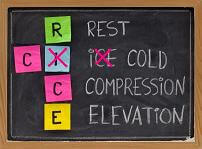 Many people follow the RICE - Rest, Ice, Compression & Elevation - formula when treating a soft tissue injury.
While RICE is a popular method, the reality is that ice can actually freeze your skin and numb your nerves, causing 'cold burns' and even permanent damage to your skin and underlying tissue.
The proper solution is RCCE® - Rest, Cold, Compression & Elevation.
We don't want to apply ice - we want to apply cold that is just above freezing.
Yes, you want cold - and lots of it - but not so cold that it is below the freezing point of water.
Many people follow the RICE - Rest, Ice, Compression & Elevation - formula when treating a soft tissue injury.
While RICE is a popular method, the reality is that ice can actually freeze your skin and numb your nerves, causing 'cold burns' and even permanent damage to your skin and underlying tissue.
The proper solution is RCCE® - Rest, Cold, Compression & Elevation.
We don't want to apply ice - we want to apply cold that is just above freezing.
Yes, you want cold - and lots of it - but not so cold that it is below the freezing point of water.