Hip Bursitis

Cycling Injuries

Sciatic Nerve

Symptoms of Sciatica

Back Muscles

Iliotibial Tract


Hip Bursitis is a term that is used to describe a buildup of fluid in the side of the hip. Typically, people notice pain and a lump in the side of their hip. For some people, the lump isn't noticeable, just the pain. Others notice more of a lump and little pain. Both situations are often Hip Bursitis.

A bursa is a little sac in your body filled with 'synovial fluid' that works to protect the moving parts of your joints.
They can vary in shape and size, but generally they are little buffers or pillows with very slippery surfaces.
They are in various parts of your hip and protect adjacent tissues from damage resulting from rubbing during motion.
Common hip bursae are the Iliopsoas, Trochanteric, Gluteus Medius and Ischiogluteal.
Your bursa can take different shapes depending on the joint it's part of.
Your body can even grow a bursa strategically, so that it acts as another pillow, to stop other tissue in your body from rubbing on each other, like your ligaments and tendons where they run close to the bones.
So, a bursa is an important part of your joint health.
It's part of the protection, lubrication, nourishment, and cleaning of every joint.
'Bursitis' is what we call it when your bursa swells up excessively with synovial fluid.
When your body detects some sort of damage to the tissue (a tendon or ligament) in your joint, it starts producing more synovial fluid in the nearby bursae.
It does this to protect and lubricate and nourish and clean the area.
That's a good thing!
But, when the nearby damaged tissue persists in your joint, for weeks or months, your body produces more and more synovial fluid.
When too much synovial fluid is produced, the bursa will start to swell.
That is Bursitis.32x
Bursitis itself is not an injury.
Bursitis is the result of injury nearby and it is your body responding to protect and heal the area.44x Bursitis is a symptom.
The injury is in some other tissue near that bursa, commonly a ligament or tendon, and sometimes cartilage in your hip joint.
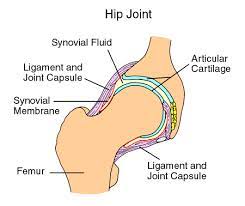
The spot where two bones meet at a joint can be a very harsh environment.
When two bones meet in your hip, they don't actually come in contact with each other as 'bone on bone'.
Rather, at the points where one bone would 'touch' the other, your body actually grows cartilage on the end of each bone.
The cartilage acts as a bumper, and a wear pad, and slippery surface so the bones don't wear on each other.
Cartilage is designed to take the abuse when two bones touch.
Over time, if it gets damaged, it repairs itself.
The process is slow, but that's what it is designed to do.

Connected to the synovial membrane is a sac that swells and shrinks a tiny bit as your joint is compressed and relaxed - That's your Iliopsoas bursa.
When your joint bones squeeze together a bit of fluid moves into the bursa.
When your joints relax, the bursa pushes the fluid back into the joint.
That back and forth movement of synovial fluid is the 'blood flow' for your joint and it keeps all the tissue in there healthy.43x Constant motion is good for your joints.
It keeps them healthy.
Your joints are designed for constant motion.
All that said, it's not impossible that the bursa itself is the only part that really appears as injured.
In rare circumstances the bursa can get infected.
This is called "Septic Bursitis".
When that's the case, antibiotics will be the solution.45x Those cases are very rare though.
More commonly, when the bursitis really just seems to be an issue with the bursa itself, it's because it's taking too much stress too often.
Let's be clear: Your hip is designed for repetitive motion.
It is designed to walk thousands of steps day after day after day.
So it's extremely unlikely that regular gentle activity is the cause of bursitis.33x Look for something more.
Some people will recognize that there is a strenuous activity that they are doing repeatedly.
That may be the cause.
That would also have been a bit obvious, so those people generally don't find themselves searching for answers here unless they really just like learning about their body.
By far the most common unrealized strain people experience is isometric strain.
What is the underlying injury that is causing you to have Hip Bursitis? Most people with a Hip Bursitis don't realize which part of their hip is actually injured. That's why they are looking for information on Hip Bursitis, instead of the real problem in their hip. This is very common. If you know that you injured the area some time ago and you have bursitis now, then you can be pretty sure that the original injury isn't properly healed. This bursitis is your body responding to the underlying injury. Heal that injury and the bursitis will also go away.44x Most people in this scenario clearly recognize the original injury is/was the problem.
The most common underlying injury is cartilage damage on one or both bones. Cartilage is very tough tissue. It is a rubbing pad, a protector, between your hip bones so they don't actually rub on each other. You may have heard the term 'bone on bone'. Bone on bone is not a good thing which is why there is always cartilage between bones. Sometimes that cartilage gets a bit of a tear in it. Sometimes it just gets a bit frayed on the outsides. When the tear is significant you feel it in your hip long before Hip Bursitis develops. When the cartilage damage is minor though, you may not feel it. The original injury goes unnoticed. Then, your body produces extra synovial fluid to help do all those good things for your cartilage that we discussed above. If your cartilage heals you never know there was a problem. But if your cartilage doesn't heal (typically because of small repetitive reinjury), your synovial fluid can build up to a point where Hip Bursitis develops.32x
The next most common cause is Osteoarthritis. People often don't realize there are two kinds of Arthritis: Osteoarthritis and rheumatoid arthritis. Rheumatoid arthritis is the bad one because it's a disease-like condition and it is a problem that doesn't go away. But most arthritis is actually osteoarthritis which is a problem coming from overuse - overactivity in a joint.

We want to be clear here though. Overactivity that causes osteoarthritis is when you do something excessively strenuous over and over. If the activity is light, you can do it endlessly and not have to worry about developing arthritis. If the activity is light, the synovial fluid is always in the middle of the joint, and the joint moves freely and without damage. Walking and jogging on flat land, as well as treadmills, and elliptical trainers, are generally considered light activity.
If the activity is heavy, if you are putting a lot of pressure on the joint during the motion, the bones can push together to the point the synovial fluid gets squeezed out of the way and the cartilage touch each other. Even this can be okay, because the cartilage is there for that purpose, to be a bumper and wear pad during times of heavy strain. But there's a limit.

If you do a heavy load activity over and over and over again so that the cartilage is constantly bumping and grinding on each other, then it is possible they get worn down over time faster than they can regenerate.33x When that is the case, a doctor will tell you the joint has developed osteoarthritis.
Osteoarthritis can go away if you let up on the activity and let the joint heal. Often, active people develop osteoarthritis in their joints that they don't even realize is there. And the body's response to osteoarthritis is, again, to start producing synovial fluid to help the joint heal.43x When it is mild enough that you don't notice it, but it persists for a long time, then that can cause Hip Bursitis to develop.
Again, it's worth noting that if you are doing mild repetitive activity, you are not likely to sustain any injury no matter how much you do it. If the cartilage on the bones is not being pushed hard enough to bump and rub a lot, then your joint can do that activity forever. So don't get confused by the terms 'overuse injury' and 'repetitive strain injury'. That sort of injury only occurs if the excessive activity is also excessively strenuous on the joint.
There are other much less common hip injuries that can result in Bursitis. Suffice it to say that if some part of that hip has an injury that you don't know about and your body is trying to resolve it for a long time, Hip Bursitis can result.

Your hip is designed to be in constant motion.
That motion contributes to circulation and prevents the parts of your joints from getting squeezed for too long.43x People don't realize, you can actually hurt your hip by 'doing nothing'.
Constant pressure on a body part when it is not moving can lead to injuries called Isometric Strain Injury.
If you are inactive for an extended period of time, and your hip is being held in a position where part of it is being squeezed too much and too long, you may be hurting yourself.46x
You have a synovial fluid buffer between the bones in your hip and cartilage on their ends to protect them when they get too close.
When you move, the fluid is squeezed from between the bones into the bursa and back when the squeeze is released, over and over again.
It's designed to work that way.
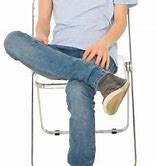 It's possible, though, when you stop in the wrong position, that your bones squeeze the joint constantly.
When that happens, the synovial fluid can get all squeezed away until the cartilage from one bone is pressing constantly and firmly on the other.
If you stay like that long enough you can do some damage to your cartilage.47x Or, if you move the joint, while the cartilage are tightly squeezed together, they may tear.
If that position is held for really long periods of time, day after day, that damage may accumulate.
It's possible, though, when you stop in the wrong position, that your bones squeeze the joint constantly.
When that happens, the synovial fluid can get all squeezed away until the cartilage from one bone is pressing constantly and firmly on the other.
If you stay like that long enough you can do some damage to your cartilage.47x Or, if you move the joint, while the cartilage are tightly squeezed together, they may tear.
If that position is held for really long periods of time, day after day, that damage may accumulate.
The same goes for your tendons and ligaments and nerves and the other tissue in your hips.
If they get squeezed under a lot of pressure for a very long time, they can get damaged.
Very often, it is the times when we're not using our bodies that cause the condition.
And that kind of damage doesn't hurt when it's happening.
It hurts later, when you try to use the tissue for your normal activity.48x Very often, that is what is behind Hip Bursitis, especially when you don't remember an event that could have caused it in the first place.
 So, the chances are high that you may be hurting your hips during times of inactivity.
It may be when you are sitting for long periods with your legs crossed.
Or you may stand for hours with your hip extended and all your weight on one leg.
It may even be a position that you sleep in for long periods.
There may be times when your hip is locked in one position for a long time and with a fair bit of weight or pressure.
Think about it.
So, the chances are high that you may be hurting your hips during times of inactivity.
It may be when you are sitting for long periods with your legs crossed.
Or you may stand for hours with your hip extended and all your weight on one leg.
It may even be a position that you sleep in for long periods.
There may be times when your hip is locked in one position for a long time and with a fair bit of weight or pressure.
Think about it.
With Isometric Strain, you probably don't notice it when you're actually doing the damage.49x This makes it hard to figure out because you end up feeling the pain during other times of activity.
It is quite possible that the activity you are doing when you feel the pain isn't the root cause of the problem.
But the pain is an indication that your situation is bad enough that your activity may start to make your situation worse.
The good news is that if you correct the underlying cause and treat the condition so it heals, you may be able to resume your favorite activity and never have to worry about hip bursitis again.
So often people go to their GP complaining about pain and swelling in the hip and the doctor says, "it's hip bursitis".
In many cases, that is likely to be an incorrect or incomplete diagnosis.
There are many hip issues that can show up as pain and swelling.
There could be ligament damage or a torn tendon, or perhaps tendonitis.
There could be bone spurs.
You might have rheumatoid arthritis or be feeling osteoarthritis without bursitis being part of it.
It may be something more serious.
Whatever the case, declaring it 'hip bursitis' is just the doctor saying you have a symptom.
You want to know the underlying cause so you can address the issue most effectively.
An X-Ray or an MRI will provide further insight, so the real issue can be properly diagnosed.
If you know what part of your body is injured and in what way, it will give you valuable insight into what you can do to recover properly and completely.
Hip Bursitis is going to last until your body successfully heals the underlying injury. By the time that swelling develops to the point that you notice it, you have probably had the injury for several months already. There's no doubt about it, something in your lifestyle is causing your injury to persist - your body can't heal the problem as fast as it is getting reinjured. So, it is unlikely that it will just go away, unless you change something about your activity.
Some people get to this point and realize what may be the root cause. Perhaps it was an increase in activity level or a new activity. Perhaps it was that you have always maintained a fairly high activity level, but as you age or gain weight (we almost all do a bit with age), maybe your body can't keep up as well. In many, many cases, you did something once that caused you to have an injury in the moment, and it didn't have a chance to heal, and the injury has persisted ever since. That's the best scenario, because if that's the case, if you can allow your body to heal and get past that injury, you are likely to be able to return to the same activity level as before and never have the problem again. No matter what the cause, though, you have an underlying injury and you need to let it heal. If you heal your injury, regardless of the reason it started in the first place, your bursitis will go away and you will likely be able to resume normal life. That is, if this whole ordeal is dealt with properly...
The internet is full of bad advice about treating your hip.
When it comes to Hip Bursitis, there is a lot of misleading information online.
Many sources are focused on gaining followers or selling cheap gimmicks on platforms like Amazon.
Their priorities are often based on what benefits them, not what helps you.
Here's a short list though:
It's not your shoes.
Draining it doesn't solve the underlying problem.
Painkillers probably make it worse as they set you up for reinjury.50x Driving through the pain will just make it worse.44x

One of the most harmful things you can do for hip bursitis is wear tight elastic bands, sleeves, or straps around your hip.
These products are sold everywhere, especially online, but they are not medical devices and they will not help you heal.
Worse, they increase the risk of damage by squeezing your joint tissues together and making them rub against each other when you move.
This can aggravate your injury and lead to more pain and swelling.
Yes, compression has a place - but only short sessions at rest using true medical cold compression like ColdCure®.
Never use continuous elastic compression bands during daily activity.
If you want support for your hip, use medical tape.
Tape over the joint to reduce strain without squeezing your hip together.
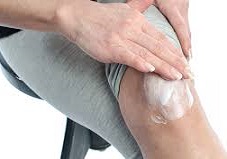
Another common mistake is relying on topical creams such as Voltaren or other pain ointments.
These may dull surface pain for arthritis, but they do not reach the bursa inside the protective hip capsule.
For bursitis, they offer no healing benefit.
Worse, by numbing your nerves they mask pain signals that would normally prevent you from reinjury.
This leaves you vulnerable to doing more harm without realizing it.
If you need safe, effective relief, use cold compression instead.
Cold works directly to reduce pain and swelling in the joint without disabling your body's natural defenses.

You usually don't have to undergo surgery in order to get rid of your hip bursitis.
Most often, you can get rid of your problem with conservative treatments.
However, it's possible that your underlying hip condition or injury requires surgery.
These are very rare cases.
Surgery carries serious risks including infection, nerve damage, tendon rupture, and extended recovery times.
Even when successful, patients often still face hip replacement in the future.
That is why surgery should be your last resort, pursued only after exhausting conservative treatment options.

A TENS machine is designed to overstimulate nerves to block pain.
It does not stimulate blood flow, and it does not promote healing.
Worse, by forcing your muscles to spasm during treatment, TENS can cause further tissue damage and slow recovery.
Respect the pain of your injury.
Pain is your natural warning signal that something is wrong.
Masking it with a TENS unit may let you push harder in the short term, but it will almost always make things worse over time.
TENS machines should never be used on hip bursitis or other soft tissue injuries.
For a little while - not forever - it is really helpful to give your hip a rest. In many cases, resting your hip for a few weeks will give it time to heal to a point that your body gets ahead of the healing / reinjury cycle. It's important to realize that once the pain and lump go away, your underlying injury may not be healed completely, so take it easy. Go back to regular life gradually, once the pain and swelling are gone. If you want to be more proactive about healing the problem, you can click here to visit the Recommended Treatments page.

If you want your swollen hip bursa to go away as quickly as possible, you need to rest the affected hip.
Avoid any physical activities that could cause further injury to your hip.
If your bursitis developed from a hip injury or condition, do your best to avoid the activity that caused this hip injury or condition.
Consider using crutches to keep the weight off your injured hip and avoid reinjury.
Do regular ColdCure® treatments to control the pain and swelling.26x The compression during each treatment helps gently move the synovial fluid back into your hip from the bursa sac.
You can also add regular BFST® sessions to your routine.
Around the 4-6 week mark you can start doing some light stretching and strengthening exercises.
Slowly work your way back to your regular level of activity.
Continue doing BFST® long after the pain and lump disappear to maintain the progress you have achieved.
Do a ColdCure® treatment if you experience any flare-ups of pain and swelling and after any significant activity.25x
Painkillers mask the pain, causing you to continue to stress and injure your hip.
This will only make your condition worse.
It is understandable that people need relief from the pain, so if you have to take painkillers, restrict them to times when you are off your feet.
You can use painkillers to help you sleep.
Using them when you are active can lead to further damage.25x Your choice of painkillers is important.
You can give us a call to discuss which ones are best.
The ColdCure® Back and Hip Wrap is designed to relieve the pain associated with hip bursitis. 26x This safe and effective pain reliever is also great at bringing down swelling and inflammation. 27x The ColdCure® Back and Hip Wrap is incredibly soothing and provides support and protection for your hip.
The pain relief element is incredibly powerful and it works instantly - there's no 20 minute wait like with pills.51x

There is no doubt about it, for healing most tissue injuries in the body, blood flow is the most critical element in rapid recovery.
Blood brings the building blocks for new cell growth.
It carries away waste and damaged tissue.
It delivers antibodies to protect against infection.
Your circulation supplies the cells with everything they need and removes much of what needs to be taken away.
While your heart ensures a sufficient supply to the body as a whole, the amount that reaches a specific area like your hip depends on many factors.
Motion in local tissue can play a major role in circulation, but when you are injured, motion is reduced, and so is the trigger to bring blood to the area. 43x
People often do not realize that gentle motion alone is enough to encourage circulation.
That does not mean putting a heavy load on your hip.
Simple, light movements without pain are all that is needed.
Adding weight or stressful activity does not improve the flow further, and the added loads can result in reinjury. 33x
Find light, gentle motions you can do with no pain at all and repeat them several times each day.
For example, swaying gently from side to side is much better than going up a flight of stairs when you're in pain.
Move only as much as you can without causing more pain.
Diathermy is a medical process to promote blood flow in tissue at rest. 7x
It works by sending energy deep into the body to stimulate blood flow far below the skin. 1x 2x
An example of diathermy is ultrasound treatment, which is often used in physiotherapy. 13x
The challenge with ultrasound is that diathermic effects last only about 4 hours, while most people only receive treatment once every few days.
It also carries more risk, as ultrasound can damage tissue if misused, and it must be performed by a trained technician in a clinic.
That means you cannot do it at home.
The good news is that you have an option for this painful condition other than ultrasound. 9xBFST® devices from King Brand are diathermic devices that you can safely use at home to promote healing. 1x 2x
With a home diathermic device, you can treat yourself multiple times each day, which greatly improves blood flow and accelerates recovery. 7x 20x
They are also more powerful, providing deeper stimulation than clinic-based ultrasound treatments. 13x
Unlike ultrasound, which treats only a small focused area and must be moved constantly, BFST® devices treat up to 70 square inches of tissue at once.
This means your hip injury can be treated more completely, with better safety and far less effort. 1x 2x
They are typically up to 10 times more powerful than ultrasound and completely safe for home use. 13x
BFST® brings extra oxygen and nutrient-rich blood to your hip - something the body must have to heal itself. 1x
Unfortunately, an injured body at rest often has restricted circulation, which greatly slows recovery. 33x
With a King Brand® BFST® Back and Hip Wrap, blood flow can be stimulated in the area of injury while you are at rest.
With improved circulation and reduced strain, you lower the risk of reinjury and you can recover from Hip Bursitis at an optimized rate.
For more in-depth information about how an injury heals click here for our Healing Page.
BFST® Back Wrap - Diathermy for the Home
If you want to just stick with the most essential piece, the BFST® Back Wrap is your best choice.
This Class II medical device actively stimulates blood flow in your hip - that's so important!
Wrap it over your painful bursa and plug it into a wall outlet for 20 minute sessions of comfortable soothing Blood Flow Stimulation.
You relax during treatments.
It's comfortable.
It's soothing.
It's helping.
Each treatment takes just 20 minutes.
Treat yourself in the morning and at night and before any strenuous activity and your healing process will happen as fast as naturally possible.
To minimize pain and swelling, use a ColdCure® any time your pain level increases, or if you have been active.
The ColdCure® Back and Hip Wrap provides effective relief of the swelling and pain that comes with Hip Bursitis.
ColdCure® Wraps use cold and compression together, because cold and compression are the two things you need to help reduce pain and swelling as quickly and effectively as possible
27x 26x.
The application of cold compression must be uniform and complete if it's going to work the best.
This is why the ColdCure® Back and Hip Wrap has been custom designed to perfectly fit the side and back of the hip, to ensure that your injury receives an even distribution of cooling power.

ColdCure® Back and Hip Wrap - Versatile and Effective!
If your biggest issue is the pain, then you definitely want the ColdCure® wrap. The ColdCure® Back and Hip Wrap comes with 3 swappable cold packs that contain our unique XC RigiGel® formula. This isn't that 'blue goo' that you get from the drugstore, no way. This is super gel. It holds tons more cold and stays cold much longer. It's ice that bends like rubber. It's amazing. The elasticized wrap holds the cold firmly in place against your injury sucking away the pain while it gently reduces swelling. If pain is your #1 concern, this is your #1 solution. With extra gel packs included you can treat the pain over and over again, never running out of ice.
The King Brand Recovery Packs listed below include our full list of products to heal as quickly as possible from your Hip Bursitis. As an added bonus, the Recovery Packs include a discount that's been built into the package price.
Three Piece Recovery Pack - Save BIG on the Essentials
The Three Piece Recovery Package deal includes the Back BFST®, Back ColdCure® and KB Support Tape™.
These are the three most important tools we can recommend for your Hip Bursitis. They work together to help heal you, protect you, and reduce the pain.
Four Piece "On The Go" Pack - The Biggest Savings Including Battery
The Four Piece Recovery Pack is designed for people who are always on the go, and want the convenience of treatments anywhere and at any time.
This bundle includes everything mentioned in our Three Piece Recovery Pack, and also includes our BFST® Battery Pack.
With the BFST® Battery Pack, you don't need an outlet.
You can take your treatments in the car, on the plane, or wherever your day takes you.
With a full charge on your BFST® Battery Pack, you will have more than enough power to complete all of your treatments for 2 or 3 days between charges.

Your hip works all day long.
It supports your body when you walk, stand, climb, and sit down.
When you have hip bursitis, you can feel every step.
You cannot pause life while you heal, so you need a way to protect your hip without losing your range of motion.
KB Support Tape™ is designed to support your tendons, ligaments, and muscles through the day and help prevent further damage while you move.
It does this while still allowing full mobility.
Our skin is soft and elastic and can stretch far more than the tissue underneath.
When you apply KB Support Tape™, it makes your skin a more rigid surface, which supports the damaged tissue below and helps prevent reinjury. 24xThat is why we call it armor for your injury.
Support Tape™ - Protection from reinjury
Too busy to slow down but still want to heal faster?
Then Support Tape™ is your must have.
Constant reinjury is a big reason hip bursitis does not get better.
Your hip may improve at rest, but once you get moving again the irritation can come back.
Taping adds daytime protection so you can do more while keeping your hip safer.
Athletes are always taped to reduce the risk of reinjury while they are active.
King Brand Support Tape™ is made for that purpose.
Taping is very underappreciated and very effective.
If you have to keep moving, you should tape.
There is one big difference between King Brand Support Tape and regular kinesiology tapes or athletic tapes you find in drug stores.
King Brand tape is medical grade; the others are athletic grade.
Medical grade tape is designed to be worn all day long, day after day, which is exactly what you need when treating Hip Bursitis.
They may look the same, but the materials are entirely different.
Athletic tape is designed for occasional, temporary use - maybe an hour or two at a time.
The materials in athletic tape can be toxic to your skin with prolonged exposure.
Some are even carcinogenic.
King Brand medical tape is designed for long-term, repeated use - the way you will use it while treating your hip.
Choose wisely and stay safe.
The tape we're recommending here for your hip is wider than normal tapes too.
Your hip is a big, strong area and this wide tape provides more than twice the support of regular tapes.
Twice the support and safer - that's proper care.
Color is just your style choice.
The Continuous Roll gives you the most control over placement and usually provides the most use from a single roll.
The BFST treatments are very comfortable and soothing.
The BFST® uses Electromagnetic Energy to stimulate blood flow underneath the surface of the skin.
It is warm, but not hot.
It does not vibrate like a massager. (You shouldn't use a massager on soft tissue injuries)
It does not cause your muscles to tense in jolts like with a TENS machine. (TENS machines are very bad for soft tissue injuries)
The BFST® isn't supposed to do either of those things.
Rather, it is soothing and sometimes gives you a gentle tingling sensation in the treatment area.
BFST treatments are very pleasant and enjoyable.
Don't be confused, while the treatments feel gentle, they are still very powerful.
Think about an X-RAY or an MRI.
Even though you don't feel the energy during those procedures, a lot of energy is definitely going deep into your body.
If you put your ear close to the BFST when it is on, you can actually hear it going through the cycles.
It's not loud, but you can hear it if you listen.
It isn't just delivering one energy level at one frequency.
Just like an MRI machine, the BFST buzzes and hums and gets louder and more quiet as it goes through the treatment cycle.
It sounds just like a mini-MRI machine.
Over the 20 minute treatment period it goes through a treatment cycle to deliver the most energy in the most effective way.
It is designed to help give you the fastest healing time possible, in the comfort of your home.
During each BFST® treatment you will only feel a mild warming sensation.
If it feels hot, you are using it on too high of a setting.
Over time, after several treatment sessions, the treatments will feel like they are getting less and less warm.
This is your body responding to the BFST® treatments by increasing your subdermal blood flow.
The more BFST treatments you do, the less warmth you're going to feel.
This is a good sign.
Your tissue is becoming healthier.
Your body is getting stronger.
This means that your circulation through your injury is improving, and your injury is improving.
When the feeling of warmth during a treatment is almost all gone, this is the signal that it is time to move up to the next level.
People usually move up to the second level after a few weeks of treatment.
We have briefly covered the most common reasons people struggle with Hip Bursitis. There is much more information available. You can explore the Quick Links menu at the very bottom of the screen - each link contains more information about the condition. Here are some of the popular pages:

King Brand® soft tissue rehabilitation medical products are the choice of many top Athletic Therapists and Medical Practitioners. We provide guaranteed results and customer satisfaction. Like all King Brand® products, there simply isn't a better performing option. All King Brand® products come with a 100% satisfaction guarantee. Try our products and if you are not completely impressed, you can send them back for a full refund. We know you will love them though, because over a quarter of a million people already use them and rave about the results.
Click here to see our Customer Testimonials
King Brand® BFST® and ColdCure® Wraps are FDA Registered medical devices. They are intended to prevent, treat and cure soft tissue injuries and chronic conditions. Part of being an FDA Registered company means that our products are made from high quality, biocompatible materials. These devices are manufactured and tested to the highest safety standards in the industry.